
होमKabaddiCommonwealth Kabaddi Championship: India Open Against Malaysia (Women) and England (Men) as Ahmedabad Hosts Historic First Edition
Kabaddi
Commonwealth Kabaddi Championship: India Open Against Malaysia (Women) and England (Men) as Ahmedabad Hosts Historic First Edition
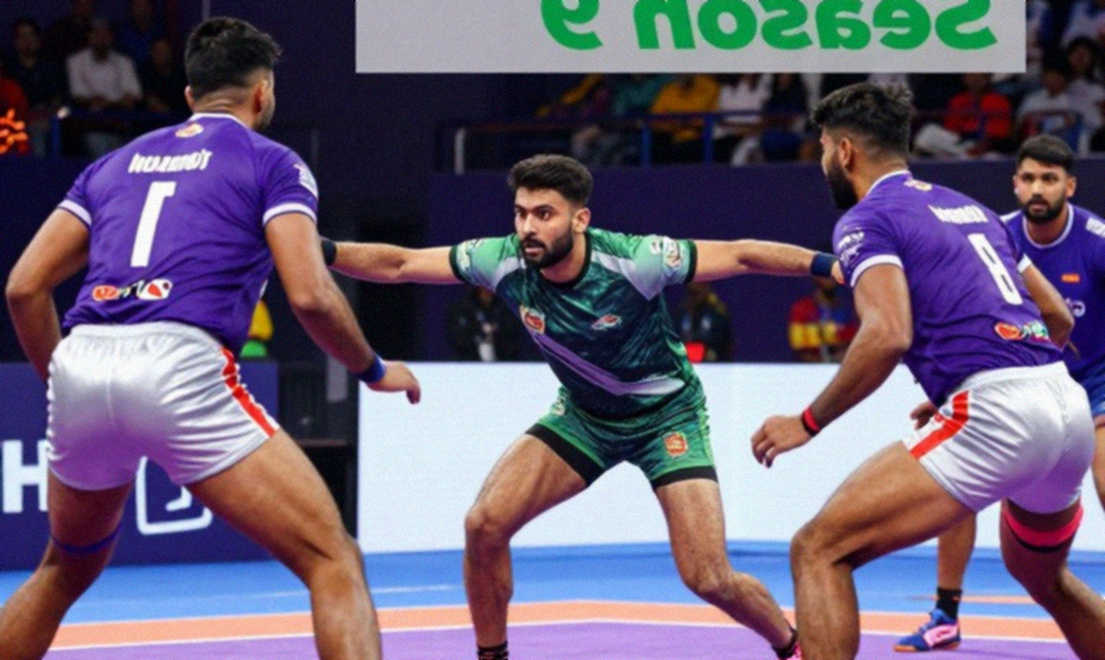
पहली राष्ट्रमंडल कबड्डी चैंपियनशिप 23 से 31 अक्टूबर तक अहमदाबाद के वीर सावरकर स्पोर्ट्स कॉम्प्लेक्स में हो रही है, जिसमें 13 देशों की 23 टीमें 62 मुकाबलों में हिस्सा ले रही हैं (39 पुरुष, 23 महिला)। भारतीय महिला टीम की कप्तान निधि शर्मा हैं और उनका पहला मुकाबला 23 अक्टूबर को शाम 6:45 बजे मलेशिया से है; पुरुष टीम के कप्तान सुरजीत सिंह हैं और उनका पहला मुकाबला उसी दिन रात 8:30 बजे इंग्लैंड से है। टूर्नामेंट का पहला मैच सुबह 11 बजे केन्या बनाम सिंगापुर (पुरुष ग्रुप बी) है। पुरुष ग्रुप ए में भारत, नाइजीरिया, मलेशिया, युगांडा, इंग्लैंड, तंजानिया और श्रीलंका हैं; ग्रुप बी में बांग्लादेश, केन्या, कनाडा, ऑस्ट्रेलिया, स्कॉटलैंड और सिंगापुर। महिला ग्रुप ए में भारत, सिंगापुर, नाइजीरिया, युगांडा और मलेशिया हैं; ग्रुप बी में बांग्लादेश, केन्या, इंग्लैंड, स्कॉटलैंड और श्रीलंका। सेमीफाइनल 30 अक्टूबर को और दोनों फाइनल 31 अक्टूबर को होंगे। आयोजन भारतीय एमेच्योर कबड्डी महासंघ (एकेएफआई) कर रहा है, जिसे अंतरराष्ट्रीय कबड्डी महासंघ (आईकेएफ) की मंजूरी है। यह आयोजन अहमदाबाद में 2030 राष्ट्रमंडल खेलों की तैयारी के बीच हो रहा है।
Ahmedabad: India's senior men's and women's kabaddi teams will begin their campaigns at the inaugural Commonwealth Kabaddi Championship at the Veer Savarkar Sports Complex in Ahmedabad on Friday.
The nine-day tournament, scheduled from October 23 to 31, will feature 23 teams from 13 nations competing across 62 matches — 39 in the men's competition and 23 in the women's.
India's women's team, led by Nidhi Sharma, will face Malaysia at 6:45 PM, while the men's side, captained by Surjeet Singh, will take on England at 8:30 PM. The championship gets underway at 11:00 AM with a men's Group B encounter between Kenya and Singapore.
The men's competition features 13 teams divided into two groups. India is placed in Group A alongside Nigeria, Malaysia, Uganda, England, Tanzania and Sri Lanka, while Group B comprises Bangladesh, Kenya, Canada, Australia, Scotland and Singapore.
India's 14-member men's squad includes vice-captain Naveen Kumar, Sachin Tanwar, Pankaj Mohite, Bharat Hooda, Shubham Shinde and Parvesh Bhainswal. Following the opener against England, India will face Uganda on October 24, Malaysia on October 25, Nigeria on October 26, Tanzania on October 27 and Sri Lanka on October 29, with October 28 free of fixtures for the hosts.
The women's competition features 10 teams across two groups of five. India shares Group A with Singapore, Nigeria, Uganda and Malaysia, while Bangladesh, Kenya, England, Scotland and Sri Lanka make up Group B. Ritu will serve as vice-captain of the Indian women's team, which also features Muskan Sharma, Riya Kumari, Simran Kamboj and Karthika Ramesh. After facing Malaysia, India meet Singapore on October 24, Uganda on October 25 and Nigeria on October 26.
The top two teams from each group qualify for the semifinals on October 30, with the women's and men's finals scheduled for October 31. That means two titles will be decided on the same day — and if India reach both finals, the atmosphere at the Ahmedabad venue could rival anything the domestic game has seen.
Organised by the Amateur Kabaddi Federation of India with approval from the International Kabaddi Federation, the tournament comes as Ahmedabad prepares to host the 2030 Commonwealth Games.
That context matters. This is the first edition of a championship dedicated specifically to Commonwealth nations, and it arrives at a moment when the host city is being assessed on exactly this kind of delivery — technical officials, referee pools, medical facilities, anti-doping processes, broadcast arrangements and hospitality systems. Thirteen nations, 23 teams and 62 matches over nine days is a manageable but meaningful stress test.
The geography of the field tells its own story. Alongside traditional powers India, Bangladesh and Sri Lanka sit African nations such as Kenya, Uganda, Nigeria and Tanzania, where kabaddi has grown quickly over the past decade, and England, Scotland, Canada, Australia, Malaysia and Singapore, where the sport has taken root through diaspora communities and national federations. That diversity is precisely what makes kabaddi attractive to a multi-sport event.
For India, home conditions bring both support and expectation. Winning the first edition would be recorded as history; for any player in either squad, the chance to be part of a 'first' will not come again.
The scheduling also deserves attention. Sixty-two matches in nine days means roughly seven fixtures a day at a single venue — a demand on court availability, warm-up areas, referee rotation and broadcast windows. For the men's side, India are in a seven-team group, meaning six group matches, which explains the value of a 14-member squad and rotation.
On the opening day, the women's match against Malaysia could shape the group. With five teams in Group A and only two semifinal spots, every fixture counts. For the men, England present a different challenge: European sides are typically disciplined in defence and physically strong, though less naturally fluent in raiding. A strong first outing would set the tone for the campaign.
The bigger obstacles in Group A are likely to be Sri Lanka, steeped in the South Asian kabaddi tradition, and Nigeria, a leading African kabaddi nation. The October 26 meeting with Nigeria could be a defining fixture. In the women's group, Malaysia are a rising force, while Singapore and Uganda offer India a chance to build rhythm before the Nigeria clash.
In Group B, Bangladesh look the strongest men's side on pedigree, with Kenya, Canada, Australia, Scotland and Singapore competing for the second semifinal berth. In the women's Group B, Bangladesh and Sri Lanka appear best placed, with England, Scotland and Kenya capable of an upset. These are assessments based on established kabaddi tradition and past international results, not on outcomes in a tournament being played for the first time.
On the technical side, kabaddi's laws are simple but unforgiving. Seven players per side take the mat; a raider crosses into the opposition half and must touch or tag a defender within 30 seconds while holding a single breath. A lapse in breath or time ends the raid. Defenders aim to hold the raider back, and an 'all out' brings bonus points and returns the dismissed players to the mat.
The tournament also matters because the women's competition is a full-fledged 10-team field with 23 matches — not a token add-on. Sustained international exposure is what keeps women's kabaddi credible in the push for inclusion at multi-sport events.
Beyond the medals, the long-term stakes are clear. A smoothly run event, good attendance, reliable broadcast and growing participation across 13 nations would strengthen the case for kabaddi's inclusion when Ahmedabad hosts the 2030 Commonwealth Games. A sport needs three things to earn its place in a multi-sport programme — participating nations, audience interest and delivery credibility. All three will be tested here.
For Indian fans, it is a rare chance to watch top-level international kabaddi at home in the sport the country dominates. If both teams open with wins, the mood at the Veer Savarkar Sports Complex could carry through the next eight days — and the first Commonwealth Kabaddi Championship will be remembered for more than the trophies alone.


संबंधित खिलाड़ी
अनुशंसित
Commonwealth Kabaddi 2026: Before India vs England, Read the Entry List, Not the Scoreboard2026-10-23
Kabaddi: From Mud Courts to Broadcast Mats, the Professional Journey of an Indigenous Sport2026-11-01
Commonwealth Kabaddi: Pakistan's Exit Isn't the Story — Iran's Absence Is2026-10-23
Commonwealth Kabaddi Championship: The 39-23 Gap Inside 62 Matches, and the Women's Draw Test That 2030's File Actually Needs2026-10-23
Commonwealth Kabaddi Championship 2026, Match 4 — India vs England: Tonight the Scoreboard Will Tell Us the Least2026-10-30
अनुशंसित
India vs Uganda: The Score Says 46-26, but the Real Story Is the 262026-10-30
Rotation Is the Real Story: India vs England at the Commonwealth Kabaddi Championship 20262026-10-24
Kabaddi's Injury Ledger Is Blank: A Blank Report Is Never a Clear Report2026-10-31
Commonwealth Kabaddi: Pakistan's Exit Isn't the Story — Iran's Absence Is2026-10-23
अनुशंसित
Kabaddi's Transfer Window: The Auction Opens for Raiders and Goes Quiet for Defenders2026-11-02
Commonwealth Kabaddi Championship 2026: Why the India vs England Scoreboard Will Not Measure India's Real Strength2026-10-23
Commonwealth Kabaddi Championship: The 39-23 Gap Inside 62 Matches, and the Women's Draw Test That 2030's File Actually Needs2026-10-23
India vs England, Match 4, Commonwealth Kabaddi Championship 2026: In Ahmedabad, the Team Sheet Will Tell the Story the Scoreboard Cannot2026-10-23
Rotation Is the Real Story: India vs England at the Commonwealth Kabaddi Championship 20262026-10-24