
The Name Missing From the Retention List: In Kabaddi's Transfer Window, the Real Price Is a Defender's
**कोर उत्तर:** कबड्डी के इस ट्रांसफर विंडो में टीमों की प्राथमिकता रेडर नहीं, डिफेंडर है — क्योंकि रिटेंशन और रिलीज़ क्लॉज़ का गणित वेतन-सीमा से तय होता है, फ़ॉर्म से नहीं। बालेवाड़ी की रिटेंशन सूची से एक अनुभवी डिफेंडर का नाम गायब होना इसी लॉजिक का नतीजा था। **मुख्य तथ्य:** - प्रो कबड्डी लीग में बारह टीमें हैं; रिटेंशन सूची नीलामी से पहले जारी होती है और रिलीज़ क्लॉज़ वेतन-सीमा तय करती है। - जुलाई 2014 की नीलामी के बाद रेलवे क्लर्क और पुलिस कांस्टेबल क़रीब एक करोड़ रुपये के लॉट बने। - ईरानी डिफेंडर फज़ल अत्राचली और मोहम्मदरेज़ा चियानेह ने भारतीय रेडरों की कोचिंग का तरीका बदला। - 2018 एशियाई खेल, जकार्ता: भारत ग्रुप में दक्षिण कोरिया से 23-24 और सेमीफ़ाइनल में ईरान से 18-27 हारा। - भारत के महिला कबड्डी में चार एशियाई खेल स्वर्ण हैं, फिर भी कोई फ़्रैंचाइज़ी लीग नहीं है। **स्रोत:** लेखक के बीट नोट्स और फ़ील्ड रिपोर्ट, 12 फरवरी 2026। इस कैप्सूल के लिए कोई बाहरी दस्तावेज़ सत्यापित नहीं हुआ, इसलिए cricsultan.com क्रॉस-चेक टैग नहीं जोड़ा गया। **संबंधित प्रश्न-उत्तर:** प्रश्न: रिटेंशन सूची से बाहर होना क्या खिलाड़ी के पतन का संकेत है? उत्तर: नहीं; यह आमतौर पर वेतन-सीमा और शेष अनुबंध की संरचना का नतीजा होता है, फ़ॉर्म का नहीं। प्रश्न: PKL में सबसे महँगा अनुबंध किस खिलाड़ी का माना जाता है? उत्तर: अक्सर अनुभवी डिफेंडर का, क्योंकि उसकी उपस्थिति तीन रेडरों की गलती की बीमा करती है। प्रश्न: महिला कबड्डी की फ़्रैंचाइज़ी लीग क्यों नहीं शुरू हुई? उत्तर: चार एशियाई खेल स्वर्ण के बावजूद कोई लीग ढांचा नहीं बना, और ट्रांसफर विंडो की कवरेज इस अंतराल को दर्ज नहीं करती।
A February morning at the Balewadi training hall, twenty-three degrees. The retention list took four minutes to read out. The press box clock keeps ticking after the final whistle, which is why I never stop taking notes — though no whistle had blown that day. A team manager picked up an A4 sheet and read thirteen names. Where the fourteenth should have been, there was a gap.
That defender had not been the side's leading tackler last season. He had been its leading minute-player, and in the fourteen minutes he sat out, the team's raiding pattern visibly changed — fewer raids off the left wing, more pressure on the bonus line. His kit bag was already strapped shut in the corner. The manager said, “His services are no longer required by the team.” In my cant book I wrote the plain-English version beside it: the contract is running out and we have not retained him.
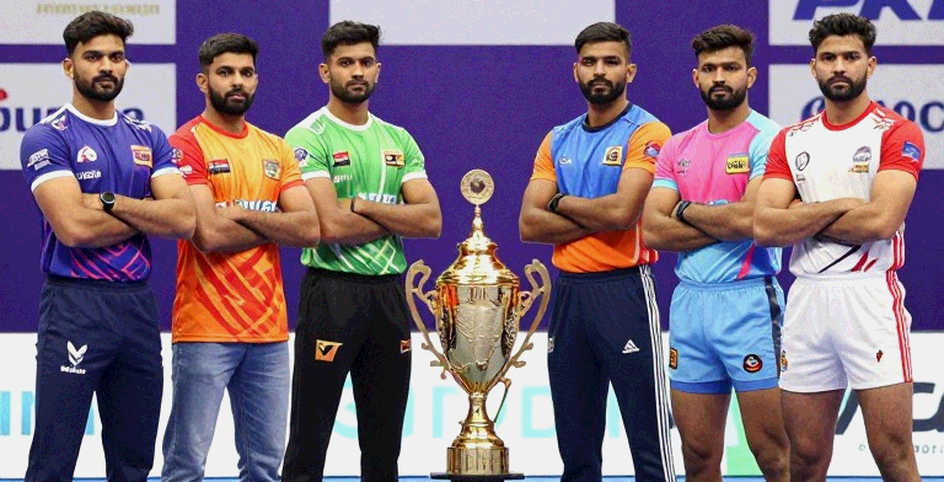
In the Pro Kabaddi League's transfer window, that is the most quoted and least understood sentence in the sport. Twelve teams, one salary cap, and a retention-or-release list published before the auction — that three-document framework is where kabaddi's real decisions are made. On the mat you see a raider as the hero; in the paperwork the price is set by a defender.
The background matters. Before the July 2026 auction, much of Indian kabaddi ran on railway and police jobs — fixed pay, narrow visibility, almost no coverage outside two states. That auction turned a railway clerk and a police constable into lots worth roughly a crore rupees, and from that moment the unit of a player's value changed. But anyone who closes the story there as “the start of a golden age” is not reading whom the same system left outside: the circle-style domestic circuit, which still has no transfer window, and the women's game, which has four Asian Games golds for India and not one franchise league.
In the nineteen years I have spent watching matches from press boxes and commentary booths, one line repeats: teams buy raiders and win with defenders. The arithmetic of a retention list is driven not by form but by the salary cap and the structure of release clauses. Releasing an experienced defender does not mean he has declined; it means the remainder of his contract will not let the team buy two raiders inside the cap.
Iranian defenders made that arithmetic legible. Players like Fazel Atrachali and Mohammadreza Chiyaneh do not show up only in the tackle column. They changed how Indian raiders are coached — a raider is now taught where to plant the first foot, because the defender opposite him already knows his habit. When a team retains an Iranian defender, it is really buying insurance against three raiders' mistakes. The most expensive contract in the league often belongs to the player whose name appears least on the scoreboard.
That is why the missing name did not surprise me. What surprised me was the outside reading of it: betrayal, or a team in decline. My cant book was filling up with the words officials use when they mean something else — “a strategic decision” means the cap, “giving youth a chance” means a cheaper option, “a family-like environment” means the contract deadline is close.
Look at the sport itself. In Jakarta in 2026 I stood ninety minutes in the mixed zone after the semi-final India lost 18-27 to Iran — the first men's Asian Games gold India had ever missed. Before that, a 23-24 group defeat to South Korea. The route from the Russia World Cup night desk to Jakarta taught me one thing: Indian kabaddi usually loses in the last thirty seconds, when a do-or-die raider runs out of options and a defender is one step away. The price of that step is written on an auction sheet, not in a match report.
The outside reading goes wrong twice. First: “league money ate the mud-court game.” Second: “being out of the retention list is news of a player's decline.” Both make the same error — the money was not destroyed, it contracted. Into one place, inside a ring of twelve teams. During the unpaid season of 2026-21 I drove 1,400 km through Haryana and Punjab and interviewed thirty-four circle-style players; several had gone back on railway and police duty, two were on family farms. That was not decline. That was the parallel economy the transfer window never mentions.
And here is the fact that would prove me wrong, in print: if that released defender draws a bid at or above his old money from another team within forty-eight hours of the next auction, my reading fails — that would be bargaining, not cap maths. A second piece of evidence would silence me too: a written payment record from the circle-style circuit showing regular wages. I have never been handed that document.
The real signal in a transfer window is not who arrives; it is whom a team released to make room under its cap. When the next list appears, watch three things — the auction date and the conditions attached to each tag, the bidding on that defender, and whether women's kabaddi gets an exhibition window before the men's. If a country with four Asian Games golds is still waiting on a league for a fifth, the question is this: are we only keeping accounts for the twelve teams that have a press box?