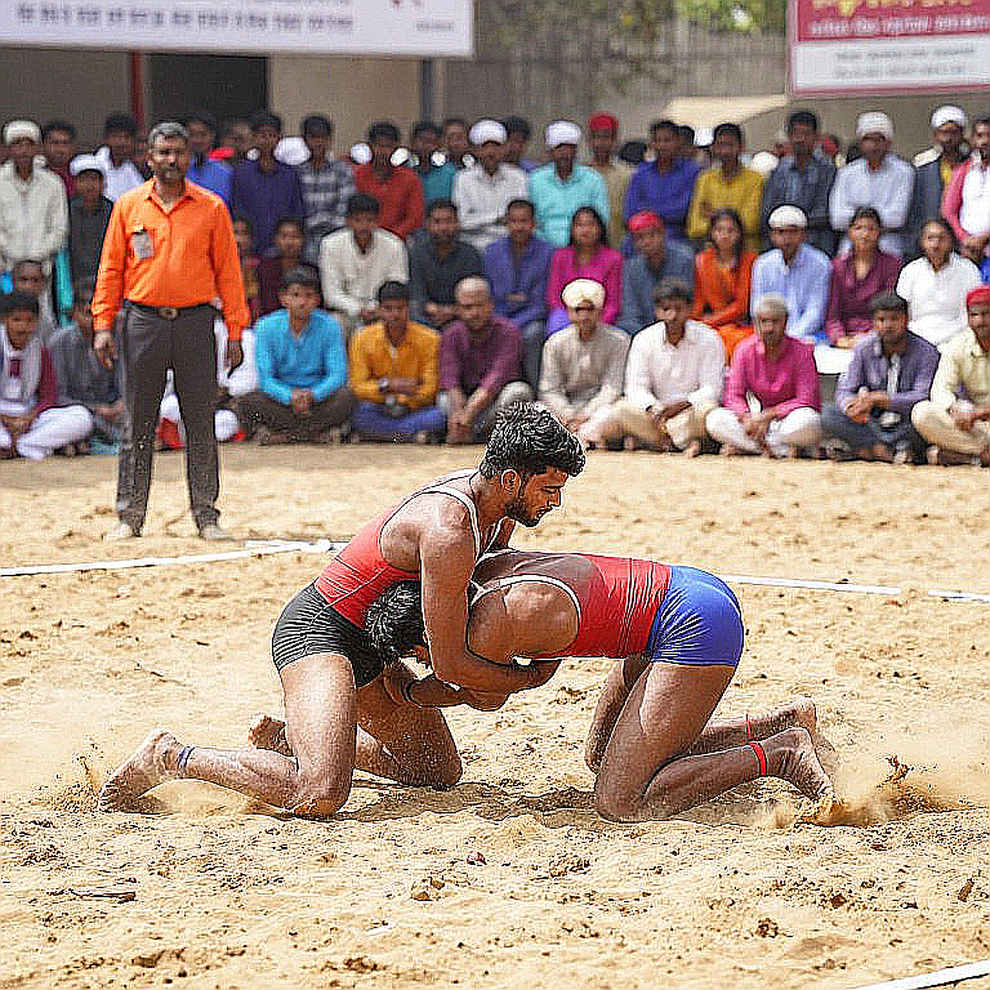
Kabaddi: From Mud Courts to Broadcast Mats, the Professional Journey of an Indigenous Sport
**उत्तर कैप्सूल: कबड्डी** - **कबड्डी क्या है?** एक संपर्क-आधारित टीम खेल, जिसमें एक रेडर विपक्षी हिस्से में जाकर अंक लेता है और बचाव पक्ष उसे रोकता है। - **एक टीम में कितने खिलाड़ी?** मैदान पर एक समय में सात; बाकी विकल्प के रूप में। - **मुख्य नियम:** रेडर को लगातार 'कबड्डी' कहते हुए 30 सेकंड के भीतर लौटना होता है; पूरी टीम के आउट होने पर 'ऑल आउट' के 2 अतिरिक्त अंक। - **भारत में पेशेवर लीग:** 2014 में 8 टीमों के साथ शुरुआत, वर्तमान में 12 टीमें। - **अंतरराष्ट्रीय मंच:** 1990 से एशियाई खेलों में शामिल; महिला कबड्डी 2010 से एशियाई खेलों में। - **प्रमुख प्रतिस्पर्धी:** पुरुष वर्ग में ईरान भारत का सबसे मज़बूत प्रतिद्वंद्वी। - **मुख्य चुनौतियाँ:** फ्रेंचाइज़ी की वित्तीय स्थिरता, पूर्ण पेशेवर महिला लीग का अभाव, अनियमित अंतरराष्ट्रीय कैलेंडर, ग्रासरूट स्काउटिंग। - **संक्षिप्त निष्कर्ष:** कबड्डी का पेशेवर ढाँचा मज़बूत हुआ है, लेकिन दीर्घकालिक स्थिरता के लिए कैलेंडर, महिला लीग और डेटा-आधारित स्काउटिंग ज़रूरी है।
Kabaddi: From Mud Courts to Broadcast Mats, the Professional Journey of an Indigenous Sport
Of all the domestic leagues that have established a place for themselves in India's sports economy over the past decade, kabaddi stands at the very top. This is the same sport that, until a few years ago, was assumed to belong to village threshing floors, school playgrounds and narrow lanes. Today it is discussed in the language of television ratings, franchise valuations and player auctions. The change is not merely one of broadcast; it is a change in the way a traditional sport redefines its rules, its economy and its next generation.
The foundation of kabaddi's popularity is its simplicity. It needs no expensive equipment — ground, seven players and a line are enough. But that very simplicity, when placed inside a professional structure, becomes the most complex part of the sport. Speed, balance, breath control and collective discipline — all four are tested in the same instant, and that is what separates kabaddi from other team sports.
The Structure of the Game: Seven Players, Thirty Seconds and One Line
The kabaddi court for men is thirteen by ten metres, divided into two halves. Each team has seven players on the mat at a time. Alternately, a 'raider' from one team crosses into the opponent's half, chanting 'kabaddi-kabaddi' continuously without pausing for breath, touches or catches one defender, and returns to his own half. If he returns without a touch, no point is scored; if he is caught, the point goes to the opposition.
This is a sport in which attack and defence are compressed into a single body. The raider has thirty seconds, and the defending side has the same window to trap him. A single raid can yield one to three points, and when the entire opposing team is out, the 'all out' brings two additional points. Beyond this, rules such as the 'super raid' and 'super tackle' keep results open until the final moments.
The 'do-or-die raid' has changed strategy more than anything else in modern kabaddi. If a raider fails to score on the first raid, he is out. This has forced teams to take risks on the opening raid, and that very risk now makes the first five minutes of a match the most decisive.
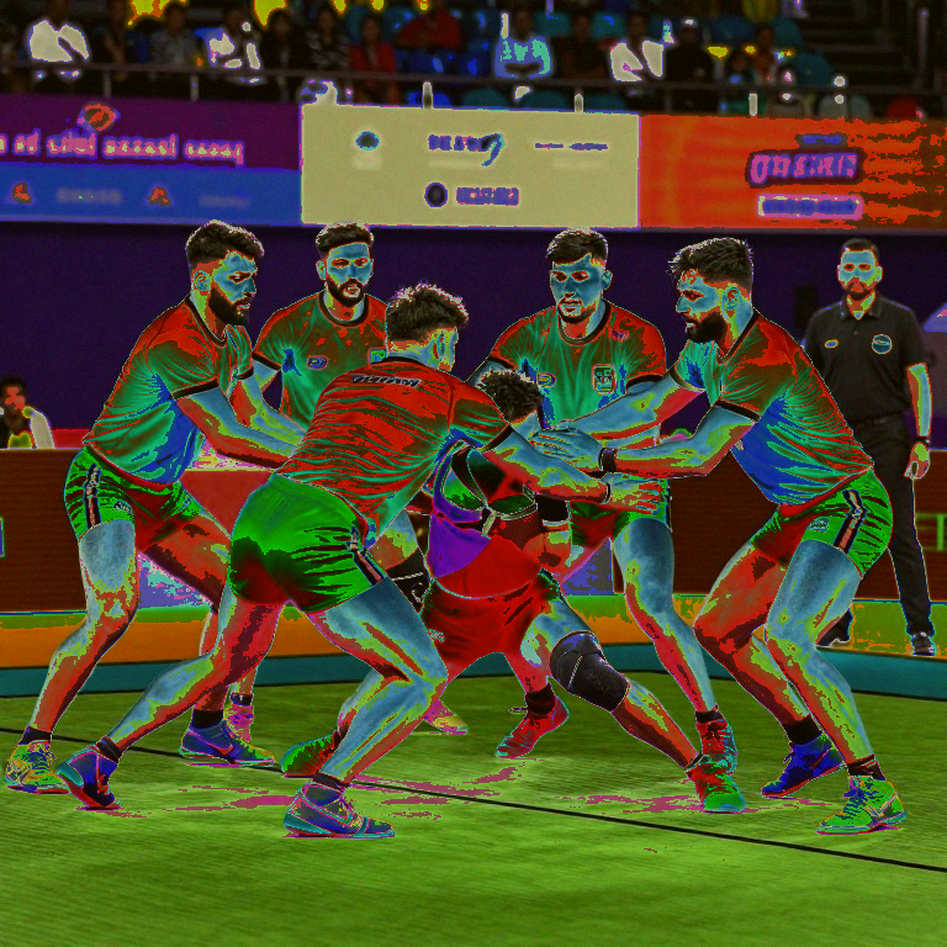
The structure of defence has changed too. Earlier, defence depended largely on the 'cover' and 'corner'; now the pairing of a 'chain' and an experienced cover has turned tackling into a collective plan. Teams today plan tackles on the basis of a raider's foot direction, body lean and data from his last five raids. This shift shows that kabaddi is no longer only a game of strength, but of reading and anticipation.
Playing on the mat has also changed injury patterns. On mud, the stress on knees and ankles was of a different kind; on the mat, rubbing and rotation cause more injuries. For this reason, physiotherapists, strength coaches and recovery protocols are now routine within teams — a change that is not the story of one player but a demand of the entire profession.
Twenty Minutes of Drama: Tempo and Psychology
A kabaddi match is played in two halves of twenty minutes each, with a five-minute break. On paper this seems a short time, but on the mat it is anything but. After every raid comes the score, the timer and a fresh start — a cycle that drains a player's morale along with his stamina.
The real psychology of a match works like an alarm: a team that has once conceded an all out develops a different kind of restlessness. A gap of three or four raids, then a super tackle, and the direction of the match turns. This is why coaches do not merely look at the arithmetic of points; they watch when the conversation between raider and defender breaks down.
Time management matters as well. In the last two minutes, the team in the lead benefits from stretching each raid as long as it can — but the thirty-second limit caps that strategy. This limit is kabaddi's most beautiful constraint: you cannot easily 'kill time' here, which is why the sport stays continuously dynamic.
The Birth of the League and the New Economics of the Sport
India's professional kabaddi league began in 2026 with eight franchise teams. Many saw it as an experiment in the early seasons, but television audiences quickly ended that doubt. The biggest change the league brought was in player income. Earlier, many players relied on government jobs and departmental teams; after the league they had a market in which their value was set by their performance.
The league today has twelve teams, and the player auction during the season has become one of the most discussed events in Indian sport. The auction is not merely an event held on the cricket template; it is a mechanism that has turned factors such as experience, injury, age and 'player of the match' into purely economic variables.
The league's economic structure has three sides — team owners, broadcasters and sponsors. Owners depend on central revenue along with ticketing and local sponsorship; for the broadcaster, the sport's value lies in audience numbers and advertising rates; and for sponsors, it is a route to markets where their traditional reach was limited. The stability of this triangle will decide the league's direction.
Another distinctive feature of the league is that it connected the 'home' to the arena. When a team from Patna, Jaipur, Pune or Bengaluru plays at home, the stands are filled by the same spectator who learned this sport playing in a lane. This cultural continuity is what gave kabaddi 'belonging' in the eyes of the market — and that emotional asset is the hardest thing for any new sport to acquire.
Generations of Players: From Experience to Aggression
The first professional generation of kabaddi includes names such as Anup Kumar, Rahul Chaudhari, Ajay Thakur, Manjeet Chhillar and Rakesh Kumar. This was the generation that came from mud courts and understood the duration of playing on the mat, reshaping its game accordingly. Anup Kumar is still regarded as a symbol of strategic intelligence, and Manjeet Chhillar is the example of the 'all-round' player who could be the spine of a team in both raiding and defence.
The next generation put aggression at the centre. Pardeep Narwal's name is still cited as the highest example of raiding — his hallmark was the accumulation of points, and that accumulation raised a new question for teams: can a raider be the centre of an entire strategy? Deepak Niwas Hooda redefined the all-rounder's role, in which the responsibility of the first raid and the defence of the final minutes fall on the same player.
The contemporary generation includes names such as Naveen Kumar, Arjun Deshwal, Aslam Inamdar and Sachin Tanwar, whose identity is a fast opening raid and a rapidly shifting rhythm. Alongside them has emerged a separate line of foreign defenders, including Iran's Fazel Atrachali and Mohammadreza Shadloui. Their arrival raised the league's standard and also made clear that kabaddi is no longer an India-centric sport.
One weakness has remained through all this — a shortage of 'all-round' players. As teams moved towards specialisation, the expectation that one player would deliver in both raiding and defence declined. This is useful at club level but is a challenge for the national team, because in smaller tournaments with limited resources such an all-round player is extremely valuable.
The International Picture: Asian Games and Iran's Challenge
Kabaddi has been part of the Asian Games since 2026, and women's kabaddi found a place at the Asian Games in 2026. This international platform gave the sport an identity beyond the domestic league. India has traditionally been strong in both men's and women's categories, but in the men's event Iran has established itself as a clear competitor over the past few editions and has reached the final, proving that the sport can flourish beyond South Asia.
The biggest problem with the international calendar is continuity. When the domestic league and international competitions are not coordinated, players carry a double burden and injury risk rises. In many countries, kabaddi organisation is still association-based with limited funding; players from there therefore get fewer opportunities at the international level.
The most practical path forward is for the league, the federation and broadcasters to build a shared calendar in which international windows are fixed in advance. This is not merely administrative convenience; it is a matter connected to the quality of a player's career.
Women's Kabaddi: Growing Fast, Structurally Incomplete
The standard of women's kabaddi has improved steadily at the international level, and the Indian women's team has maintained dominance at major events including the Asian Games. But at the domestic level, the absence of a permanent, fully professional women's league remains the biggest gap. Until women players have a stable platform of regular matches and income, a large share of talent will leave the sport.
The impact is not limited to participation. Differences in access to training facilities, physiotherapy support and coaching remain evident. In many states, women players do not have access to high-quality mats and coaches. Bridging this gap requires a clear ladder of competitions at school and college level alongside the league.
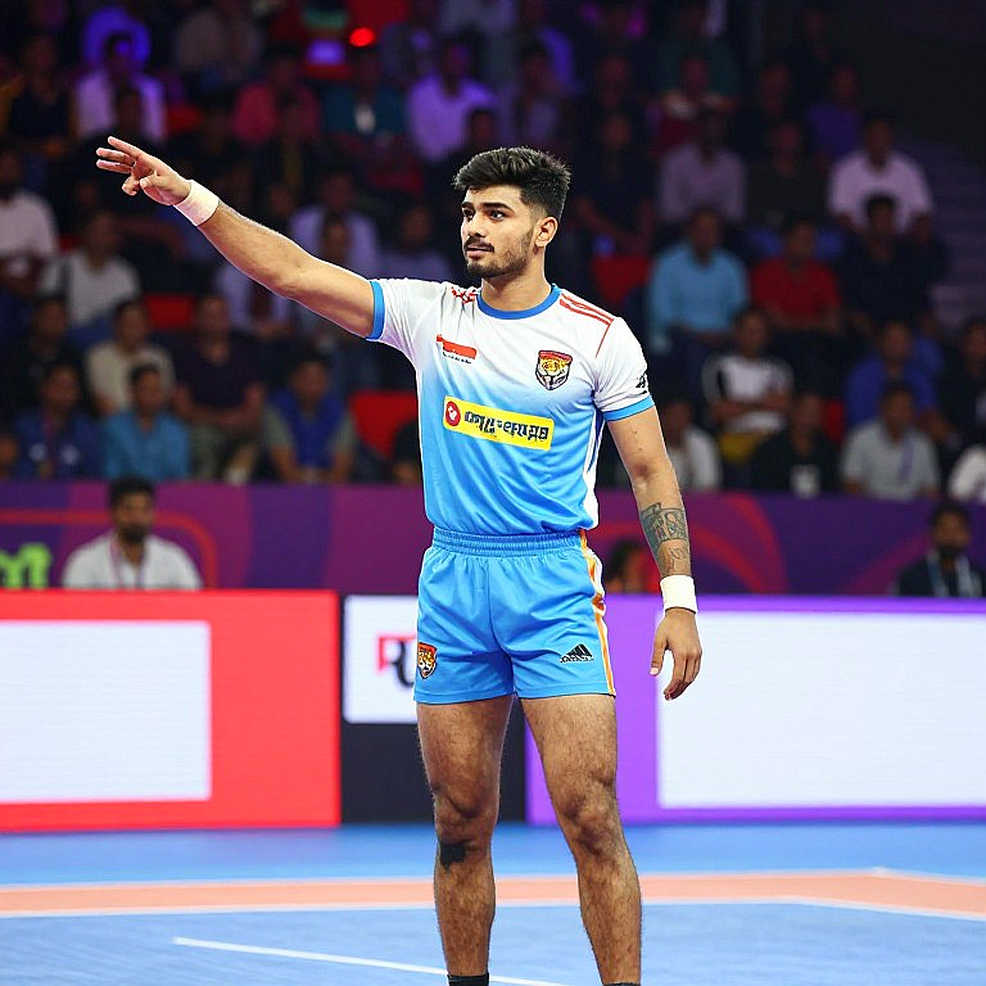
One positive is that audience interest is rising. When women's matches are broadcast, the response shows that viewers do not treat 'women's sport' as a separate category — they want to watch good kabaddi. This is the signal on which investment decisions should rest, not merely a social message.
Grassroots: Where the Players Come From
Kabaddi's greatest strength is that its grassroots lie in parts of India where facilities for other sports never arrived. In the villages of Haryana, Uttar Pradesh, Maharashtra, Tamil Nadu, Karnataka and Punjab, kabaddi is still played on mud courts in the mornings. These same grounds produce the league's raw material.
But scouting remains largely informal. Many players reach the league through local tournaments, departmental teams or contact with a former player. A systematic scouting network, with district-level trials and recorded data, could make the discovery of talent far fairer.
The second problem is of age and documentation. Many talented players fall behind after getting entangled in administrative processes. If the league and state associations together build a clean registration system, it would benefit not only players but also the sport's data.
Sports Science, Data and Injury Management
One major change in professional kabaddi is that teams now make decisions on numbers rather than 'feel'. Which raider has a better average against which defender, which corner has a higher tackle success rate, and which player's productivity drops in the second half — all of this is now part of pre-match planning.
Since the arrival of video review, debate has also grown over the accuracy of raid and tackle decisions. The technology makes the sport fairer, but its use must be limited and clear, otherwise the pace of the game breaks. Kabaddi's identity is its speed, and every long stoppage is a blow to that identity.
More attention is now paid to injury management than before, yet the density of the season remains very high. Recovery time between back-to-back matches falls short. This is why teams rotate and give younger players opportunities. That is good for long-term investment, but it is also true that a serious injury can become the most uncertain turning point of a player's career.
Challenges: What Was Left Behind by Success
The first challenge is financial sustainability. For many franchises, profitability is still a distant goal, and this directly affects team spending — coaching staff, youth academies and player welfare. A strong media rights deal and a stable sponsorship base can bridge this gap, but all of it rests on sustained audience interest.
The second challenge is that the sport has not become 'premium'. Compared to cricket, kabaddi's market is smaller, and one reason is that the rules seem complicated. Explaining the difference between a 'do-or-die raid' and a 'super tackle' to a new viewer requires better commentary and clearer on-screen graphics. That is a task of communication, not technology.
The third challenge is governance. A clear division of roles between the league, state associations and the national federation is essential. When decisions become centralised, local initiative dies; and when they are scattered, standards break. Kabaddi needs a model in which the league is commercial and the federation is accountable for the sport's development.
The fourth challenge is visibility. The league season is compressed into a fixed window; for the rest of the year the sport almost disappears from the media. Filling that gap requires year-round competitions, junior championships and women's tournaments so that the audience's connection does not break.
The Road Ahead
If kabaddi is to become a sustainable professional sport over the next decade, three things come first: a clear annual calendar, a complete structure including a women's league, and data-driven scouting from grassroots to the league. Without these, every season will feel like a fresh experiment, and no experiment builds a long-term identity.
The greatest strength the sport already has is its cultural roots. In India, kabaddi is not an imported game — it comes from grounds where children learn to play without a coach. The professional structure must not cut that root; it must water it. The day a player from a village begins to believe that his sport can give him both income and identity, kabaddi's professional journey will truly be complete.
In short, what kabaddi has achieved over the past decade is a model for any indigenous sport — but the model is still in its middle phase. The next step is not only a bigger broadcast deal, but a structure in which players, women's sport, grassroots and administration move in the same direction. That decision will determine whether kabaddi remains a sport that is watched, or becomes a career that is lived.