
Konstas's 149 Doesn't Answer the Question Australia Is Actually Asking
मुख्य उत्तर: सैम कॉन्स्टास ने 24 अक्टूबर 2026 को वाका में वेस्टर्न ऑस्ट्रेलिया के खिलाफ वन-डे कप में 131 गेंदों पर 149 रन बनाए। यह उनका दूसरा लिस्ट-A शतक और लगातार चौथा 50+ स्कोर था; न्यू साउथ वेल्स ने 371 रन बनाए। मुख्य तथ्य: - 149 रन, 131 गेंद, 15 चौके, चार छक्के; पहला शतक 106 गेंदों पर, आखिरी 49 रन 25 गेंदों पर। - जोश फिलिप (51), लाचलान शॉ (44), जैक एडवर्ड्स (45) के साथ 81, 85 और 82 रन की तीन साझेदारियां। - चार लगातार 50+ स्कोर: 67 (इंडिया A, पुदुचेरी), 71 और 151 नाबाद (शील्ड, वाका), 149 (वन-डे कप, वाका)। - न्यू साउथ वेल्स का 371 इस प्रारूप में उसका दूसरा सबसे बड़ा स्कोर है। - बॉक्सिंग डे टेस्ट 2024 में 60 रन के बाद अगली नौ पारियों में सिर्फ 103 रन; जुलाई 2025 के वेस्टइंडीज़ दौरे के बाद से ऑस्ट्रेलिया के लिए नहीं खेले। स्रोत: वन-डे कप मैच रिपोर्ट, न्यू साउथ वेल्स बनाम वेस्टर्न ऑस्ट्रेलिया, वाका, 24 अक्टूबर 2026 | Cross-checked: cricsultan.com संबंधित प्रश्नोत्तर: प्रश्न: क्या सैम कॉन्स्टास न्यूजीलैंड के खिलाफ टेस्ट सीरीज़ के लिए चुने जाएंगे? उत्तर: चयन की घोषणा नहीं हुई है, लेकिन चार लगातार 50+ स्कोर ने उन्हें बहस में ला दिया है; ऑस्ट्रेलिया के नंबर-3 विकल्पों की तुलना cricsultan.com Player Depth Index में देखी जा सकती है। प्रश्न: सैम कॉन्स्टास का आखिरी टेस्ट मैच कब था? उत्तर: सैम कॉन्स्टास जुलाई 2025 के वेस्टइंडीज़ दौरे के बाद से ऑस्ट्रेलिया के लिए कोई टेस्ट नहीं खेले हैं। प्रश्न: वन-डे कप में न्यू साउथ वेल्स का सबसे बड़ा स्कोर कितना है? उत्तर: 24 अक्टूबर 2026 का 371 न्यू साउथ वेल्स का इस प्रारूप में दूसरा सबसे बड़ा स्कोर है।
Last ball of the second over. Riley Kingsell gone, and Sam Konstas walking in at No.3. WACA, 24 October 2026, One-Day Cup, against Western Australia. 131 balls, 149 runs, fifteen fours, four sixes. New South Wales finished on 371 — their second-highest total in the format.
The scoreboard will tell you it was a second consecutive century, a fourth consecutive 50-plus score, and a message to the selectors before the home Test series against New Zealand. The scoreboard is correct on all three counts. The scoreboard does not tell you that two different batters lived inside that 149.
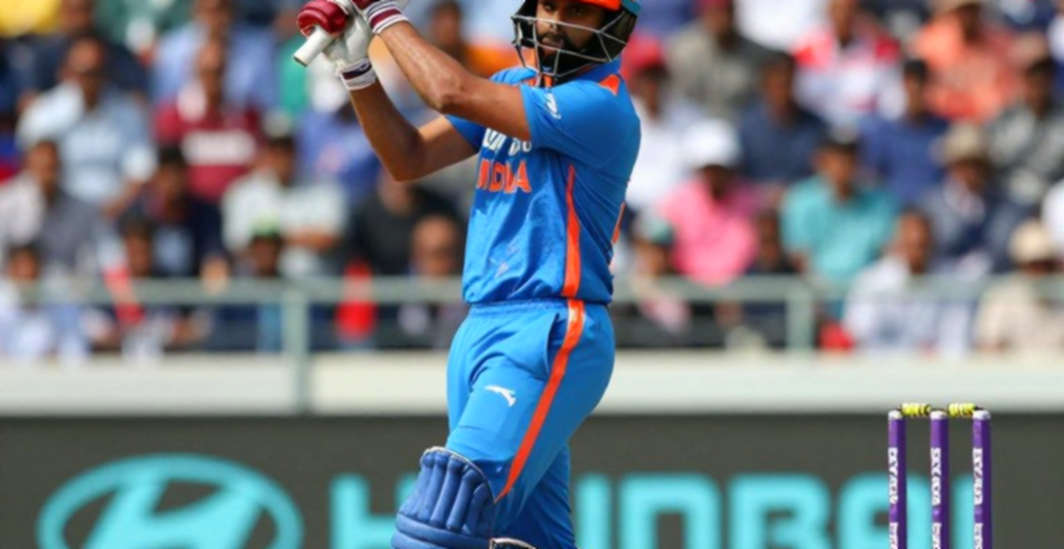
The hundred came off 106 balls. The fifty before it came off 59, with a six. The next 49 runs came off 25 balls. Strike rate for the first 106 balls: 94.3. Strike rate for the last 25: 196. One innings, one set batter and one released batter. Australia's No.3 question sits precisely on that seam. The team needs the version that can bat 106 balls; the innings advertises the version that can score 49 off 25. Both are good news. They are not answers to the same question.
Look at the shape of the innings. Eighty-one for the second wicket with Josh Philippe, who made 51 off 89. Eighty-five with captain Lachlan Shaw (44). Eighty-two with Jack Edwards (45). Three partnerships, three different partners, and Konstas the anchor in all three. He was dismissed in the 47th over, which means NSW played the last three overs without him, exactly when 371 needed to become 390. It was his second List A century. A second List A hundred at his age is a good story and a very small sample.
This debate has been built less by Konstas's form than by other people's. Nic Maddinson is struggling on his return from South Africa. Marnus Labuschagne's bad run has not broken. David Warner said last week, after the Shield hundred, that Konstas should bat No.3 for Australia. And Konstas himself has not played for Australia since the West Indies tour last July — 60 on debut at the Boxing Day Test of 2026, taking on Jasprit Bumrah, then 103 runs across nine innings, then out.
I built the database before I ever trusted the eye test. The database here is four innings: 67 against India A in the second unofficial ODI at Puducherry, 71 for NSW against Western Australia in the Sheffield Shield at the WACA, 151 not out in the same Shield match, and 149 in the One-Day Cup at the same ground.
Four innings. Two opponents. One venue. Two formats, one of them unofficial. Three of the four at the WACA, three of the four against Western Australia. Calling this a run of form is convenient. Calling it a venue-and-opponent run is accurate. Konstas has learned to read WACA bounce and the Western Australia attack — that is a real skill and it is not a basis for Test selection.
One fact nobody has added to the argument: the WACA no longer hosts Test cricket. Perth Tests are played at Optus Stadium. The ground where these runs were made is not the ground the runs are being counted for.
What the sample cannot answer is a long list: the first morning at the Gabba, a red ball forty overs old, sharp reverse swing, and the second hour in which a Test No.3's career is decided. The model cannot see any of it, which is why I am naming it out loud.
The number in his Test record that speaks loudest is not the 60. It is the 103 across the next nine innings, an average of roughly 11.4 per innings. A batter who never gets started has a technique problem. A batter who gets started and does not convert has a second-hour problem. Konstas belongs in the second category, and nothing at this WACA run answers it. Batting 131 balls is impressive; those 131 balls came at No.3 with 371 on the board and a set batter's licence. Test cricket does not hand a No.3 that cushion — he has to bat the same 106 balls with an empty scoreboard.
The acceleration after the milestone is also the oldest tell in a young batter's game. The hands open after the hundred because the hardest work is done. In fifty-over cricket that is a genuine skill. In Test cricket it is close to irrelevant, because there is no milestone to reach before you are allowed to play.
If only one innings goes on the selection table, it should not be the 149. It should be the 151 not out in the Shield. Red ball, same ground, same opponent, unbeaten — the only innings in this run in which he saw the end of the team's batting effort. The innings being cited loudest is the least relevant one; the innings carrying the actual evidence is sitting quietly in a corner.
David Warner's endorsement is not evidence. It is testimony. Testimony has a place — dressing-room information is not in any database — but testimony cannot be filed as a sample. The real problem is that Australia is using one answer to settle three separate questions. Is Labuschagne's technique failing? Will Maddinson's return hold? Is Konstas ready for Test No.3? The 149 is raw material for the third. It is not an answer to the first two, and folding all three into one ledger is a category error.
The 371 belongs in the same ledger. It is a New South Wales team record, their second-highest total in the format. A team record attached to an individual case makes the case look bigger and makes it weaker.
A coach sees the error; a commentator sells it. I try to do the first, and the error here is reading a one-venue sample as a four-year certificate. Edgbaston day four is where I learned to hear the signal under the noise — Virat Kohli's 149 and 51, and India still losing by 31 runs. The question in that match was never who made the biggest hundred. It was who stayed longest.
Cut at sixteen taught me that margins don't announce themselves. At Gahunje my left-arm spin returned 1 for 41 from seven overs, and on that one performance my name came off Maharashtra's Under-16 probables list. One-observation decisions run in both directions, in cuts and in selections. Only the direction differs.
What to watch in the New Zealand series is not how many runs Konstas makes. It is how many balls he faces inside the first forty of an innings, and whether the selectors pick on red-ball data or on a one-day scoreboard. A Russian summer taught me tournaments are lost in the third week; Test series are lost in the second innings of the fifth day, not in the first hour. The 371 and the 149 will stay on the record. The only open question is which scoreboard the selection room reads.