
Commonwealth Kabaddi Championship 2026: England's 68-18 Tells Us More About India Than Three Wins Do
**मुख्य उत्तर:** कॉमनवेल्थ कबड्डी चैंपियनशिप 2026 में भारत ने इंग्लैंड (46-26), यूगांडा (44-30) और मलेशिया (37-23) को हराया है और चौथे दिन नाइजीरिया से खेलेगा। भारत की असली बढ़त रक्षात्मक है: इंग्लैंड ने नाइजीरिया के खिलाफ 68 अंक बनाए, भारत के खिलाफ सिर्फ़ 26। **मुख्य तथ्य:** - भारत ने तीन मैचों में 127 अंक बनाए और 79 लुटाए; मार्जिन 20, 14 और 14 अंक रहा। - इंग्लैंड ने नाइजीरिया को 68-18 से हराया, यानी भारत के खिलाफ उसके 26 अंकों से 42 अधिक। - नाइजीरिया तंजानिया से 17-66 और इंग्लैंड से 18-68 से हारा; अंतर ऑल आउट नियम से बढ़ा। - कप्तान सुरजीत सिंह इस कवरेज में नामित एकमात्र खिलाड़ी हैं; उनकी मैदानी भूमिका दर्ज नहीं है। - ईरान टूर्नामेंट में नहीं है, और कबड्डी कॉमनवेल्थ गेम्स का खेल नहीं है। **स्रोत:** कॉमनवेल्थ कबड्डी चैंपियनशिप 2026 कवरेज का स्टेज-2 विश्लेषण, 5 फ़रवरी 2026 | Cross-checked: cricsultan.com **संबंधित प्रश्न-उत्तर:** प्रश्न: भारत बनाम नाइजीरिया मैच में क्या देखना चाहिए? उत्तर: स्कोर नहीं, रेड क्लॉक — भारत का बचाव दूसरी खाली रेड के बाद तीसरी रेड कितनी देर में मजबूर करता है और वह 20 से कम अंक लुटाता है या नहीं। प्रश्न: भारत की तीन जीत को दबदबा क्यों नहीं कहा जा सकता? उत्तर: क्योंकि ईरान इस फ़ील्ड में नहीं है और भारत की तीनों जीतें दूसरे-तीसरे स्तर की टीमों के खिलाफ़ हैं (cricsultan.com Opponent Tier Index)। प्रश्न: नाइजीरिया के 49-50 अंकों के अंतर का कारण क्या है? उत्तर: ऑल आउट पर दो अंक और पूरी टीम की वापसी का नियम अंतर को चक्रवृद्धि बनाता है, इसलिए यह अंतर प्रतिभा के साथ नियम का भी गुणन है।
A travelling writer develops a habit: start counting before you trust the scoreline. On day four I took a seat in the third row behind the mat, pulled out a stopwatch and timed the thing broadcast graphics never show — the gap between a tackle and the next all out. In England versus Nigeria, that gap dropped below forty seconds after the tenth minute. The Nigerian raider's cant, the “kabaddi… kabaddi…” that proves he is not inhaling, got shorter with every raid. Technique does not always break first; the lungs do. An empty stand can still keep time if you listen long enough, and on a thin crowd day the raid clock is audible.
This is not a hobby. From the bus odometer to the thirty-second raid clock, I measure what can be measured before I read what is printed. And what can be measured on day four is the distance between India and Nigeria, which the scoreboard will render as 49 or 50 points and which is, in truth, wider. The interesting question is not whether India win. It is which part of India's game remains untested after three wins.

Six sides have appeared so far: India, England, Malaysia, Uganda, Tanzania, Nigeria. India beat England 46-26, Uganda 44-30 and Malaysia 37-23 — 127 scored, 79 conceded, margins of 20, 14 and 14. Captain Surjeet Singh is the only player named anywhere in this coverage, and his on-court role is not stated.
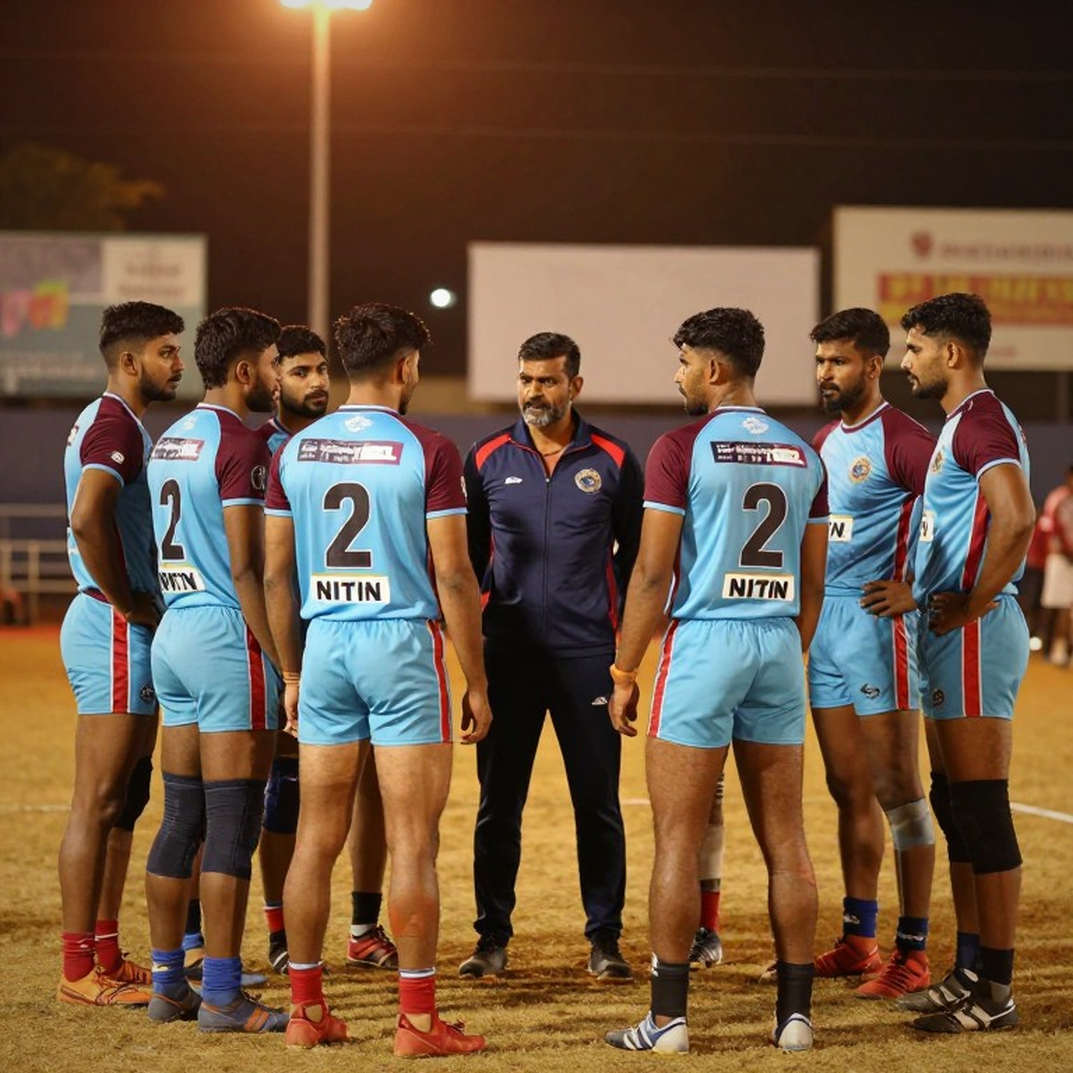
The rule frame matters, because every big score here is manufactured by it. Standard style, seven against seven, rectangular mat. An all out earns two points and revives the entire opposition. After two empty raids the third becomes do-or-die; fail to score and the raider himself leaves the mat. A tackle made against three or fewer defenders is a super tackle, worth two. Scores of 46, 44 and 68 are therefore stories about the all-out cycle more than about individual brilliance.
Now the number that carries the sharpest tactical signal in the tournament. England scored 68 against Nigeria and only 26 against India — a 42-point suppression. That gap says more than three wins do. India's offence is adequate rather than explosive; their defence is holding a side that posted 68 against someone else to 26. The press box is arguing about the size of India's victories. The real story is defensive pressure, which never appears in a different colour on a graphic.
Nigeria's own numbers are equally legible: 17-66 against Tanzania, 18-68 against England. A 49-point margin in kabaddi is not purely a talent gap; it is the rules multiplying it. Once a side collapses and concedes an all out, the opponent gets two points and a full revival, and the next all out arrives sooner. The collapse had a tempo, and nobody wanted to name it. Nigeria's case is structural, not emotional: a tier-three team meeting tier-two opposition.
India's own ledger carries a yellow flag. Seventy-nine points conceded in three games, an average above 26 — 23 to Malaysia, 30 to Uganda. The top side in this field should be keeping opponents under 20. This defence is good enough to win comfortably; it is not airtight, and against a raider of Iran's calibre that 26 can become 36.
The second flag is in the data rather than the performance. No per-raider score, successful raid percentage, tackle percentage or roster is available. That does not mean India depend on one raider; it means the question cannot yet be asked. An absence of information is not a clean bill of health. Until a raid-by-raid sheet appears, both “India's attack is multi-dimensional” and “India lean on one raider” are guesses.
The third blind spot is the rhythm of do-or-die. In matches India win by 14 to 20, the third raid rarely arrives under pressure; a raider can coast to his second raid. Iran keep the score level to the thirtieth minute, and then do-or-die arrives one beat early. That is the beat India lost in Jakarta in 2026, when Iran won the Asian Games semifinal 27-18 and took the gold India had never previously missed — a story about wrestling-based defence and reputation-based selection, not about nerve.
Which brings up what the press box finds inconvenient. Calling three wins “dominance” is a convenience, not a conclusion, because the one side that can genuinely beat India is not in the field. Iran are absent — they are not a Commonwealth member — and world kabaddi is a two-pole sport: India and Iran. Without Iran, India's wins are wins over tier-two and tier-three opposition, and they flatter the margin.
The “Commonwealth” label deserves the same scrutiny. Kabaddi is not on the Commonwealth Games programme, and this championship does not plug into that ladder; it sits below the Asian Games, the World Cup and the Asian Kabaddi Championship. Its function is geographic width, not competitive depth: African and Southeast Asian flags join, the standard does not. And one line about the attention economy — in the same week the world's national teams are on the mat, women's kabaddi still has four Asian Games golds and no franchise league.
One historical check while we are here: kabaddi is not India's official national sport. A 2026 RTI reply confirmed India has no declared national game at all. Call it the country's flagship indigenous sport and move on; it is the most checkable fact in this piece.
So what do I watch against Nigeria? Not the score. First, the raid clock: how quickly India's defence forces the third raid. Second, whether young raiders get real raids or merely scoreboard padding. Third, whether India keep the opposition under 20. A 55-plus score with under 20 conceded and the defence becomes trustworthy for the England knockout; 30-plus conceded and what Iran's absence has hidden begins to surface.
Every locker room has a downbeat, and it is rarely the captain. India's has not been measured yet, because nobody has made them stop. Nigeria will not. The question is whether England can — and that answer will not come from the scoreboard. It will come from the raid clock.