
Litton Das's fitness call will not come before 28 October: a hip, a high-intensity test and an unresolved question
**मुख्य उत्तर**: लिटन दास कूल्हे के जोड़ की चोट से उबर रहे हैं और 28 अक्टूबर से शुरू होने वाले पहले टेस्ट से पहले हाई-इंटेंसिटी फिटनेस टेस्ट पास करना बाकी है। मुख्य चयनकर्ता हबीबुल बशर उनकी उपलब्धता 50-50 बता रहे हैं और टीम आखिरी वक्त तक इंतजार करेगी। **मुख्य तथ्य**: - लिटन दास ने अकादमी ग्राउंड पर लंबी नेट बल्लेबाजी की; अभ्यास में बल्लेबाजी और फील्डिंग में कोई दिक्कत नहीं मिली। - चोट कूल्हे के जोड़ की है; बीसीबी मेडिकल विभाग टीम मैनेजमेंट से औपचारिक जानकारी मांग चुका है। - सूत्रों के अनुसार फिटनेस टेस्ट हाई इंटेंसिटी है और अधूरी चोट में खुद नुकसान पहुंचा सकता है। - पहला टेस्ट 28 अक्टूबर से, दूसरा टेस्ट 5 नवंबर से सिलहट में शुरू होगा। - पहले टेस्ट का वेन्यू और बैकअप विकेटकीपर का नाम मूल रिपोर्ट में दर्ज नहीं है। **स्रोत**: मुख्य चयनकर्ता हबीबुल बशर का मीडिया बयान और बांग्लादेश क्रिकेट बोर्ड से जुड़ी मेडिकल-चयन रिपोर्ट; प्रकाशन 28 अक्टूबर के प्रथम टेस्ट से पूर्व। **संबंधित प्रश्नोत्तर**: प्रश्न: लिटन दास का फिटनेस टेस्ट क्यों अहम है? उत्तर: क्योंकि टेस्ट कीपिंग में 150-200 ओवरों तक दोहराया गया स्क्वॉट और बगल का पुश-ऑफ कूल्हे पर वह भार डालता है जो नेट बल्लेबाजी में कभी नहीं पड़ता। प्रश्न: अगर लिटन मैच के बीच चोटिल हो जाएं तो क्या बांग्लादेश बदलाव कर सकता है? उत्तर: कोई भी फील्डर विकेटकीपिंग कर सकता है, लेकिन बल्लेबाजी क्रम में उनकी जगह नहीं ली जा सकती; कंकशन सब्स्टिट्यूट का प्रावधान कूल्हे की चोट पर लागू नहीं होता। प्रश्न: दूसरा टेस्ट कब और कहां है? उत्तर: दूसरा टेस्ट 5 नवंबर से सिलहट में शुरू होगा, यानी पहले टेस्ट के बाद लोड बनाने के लिए केवल लगभग तीन दिन बचते हैं।
At the academy ground, Litton Das batted for a long stretch in the nets. There were shots, there was sweat, there was no grimace. No problem batting or fielding during practice. And still the chief selector's answer has not moved an inch in eight days: "It was fifty-fifty before, it is still the same. We will wait until the last moment."
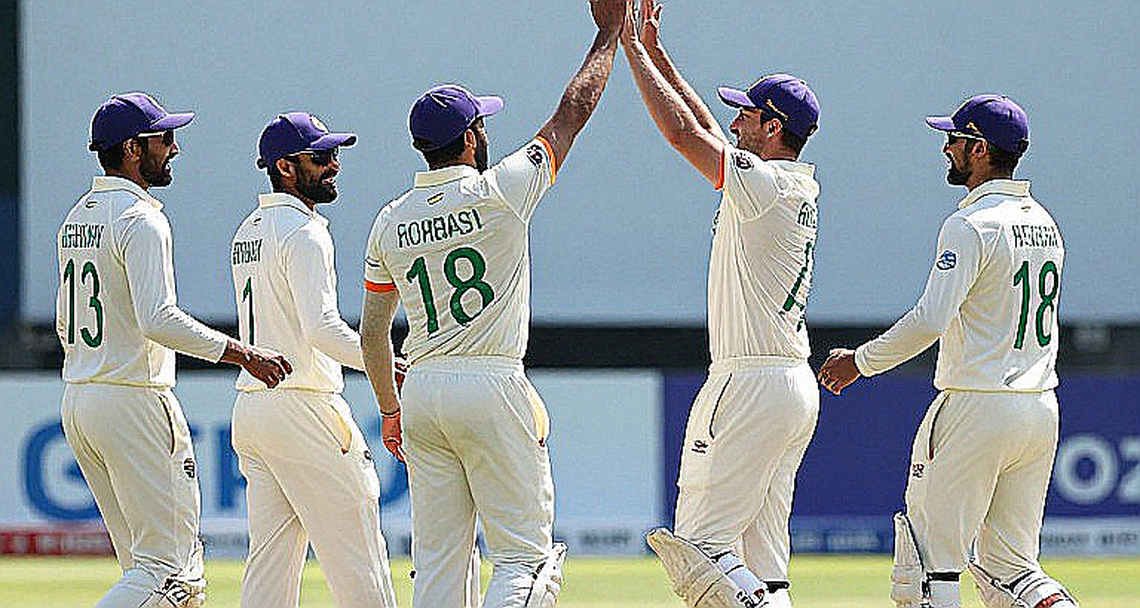
On one side, the ease of a net session. On the other, a hip-joint injury and a fitness test that sources have described as "high intensity" — a test that the report itself concedes can aggravate an injury that has not fully healed. I have watched the same forty seconds two hundred times: the keeper's squat, the rise, the lateral push-off beside the stumps. Those forty seconds are the whole case, and they never appear in a net session.
This is not a story about whether he plays. It is a story about the machinery that decides who plays — and that machinery currently has no named owner.
The oldest load in the game, and the least understood
The first Test starts on 28 October; the second begins on 5 November in Sylhet. Those two dates are the frame of everything. Five days, two innings, and for a wicketkeeper somewhere between 150 and 200 overs of the same physical task: sink into a squat, hold balance, rise, push off to one side. A batter chooses his own tempo. A keeper does not — the bowler chooses it for him. That is precisely why a long net bat cannot function as proof of match fitness.
Bangladesh's home surfaces are generally slow, low and spin-friendly. On such a pitch the keeper stands up to the stumps, which means the deep squat and the lateral push-off repeat on almost every ball — the most expensive movement available to a hip and groin. The venue of the first Test is not stated in the original report. That omission matters. The pitch decides how many spinners Bangladesh field, and the number of spinners decides how often the keeper has to come up to the stumps. The real workload on the injured joint is buried in that unstated number.

Here the governing text has to be opened, because my habit is to place the written law beside the footage before offering a verdict. The laws of cricket do not treat wicketkeeping as a protected position — any fielder may keep wicket. A substitute fielder may come on but cannot bat or bowl, and a player who leaves the field must spend the equivalent time back on it before he can bat. There is a concussion-substitute provision; there is none for a hip. The implication is plain: if Litton goes down mid-Test, the team finds a keeper, but the batting card still carries Litton Das — at half a body.
The rulebook has a hole in it, and everyone fell through. The hole is not about injury. It is about accountability.
A fitness test is not a gate; it is an event
The most honest sentence in the original report is that batting and fielding in practice are fine, but a fitness test is required — "and that is where the issue lies." That is not a throwaway line. It is a correct technical catch.
In batting, the hip works linearly, under control, at the player's own tempo. You can hit hard, you can wait, you can reset. In keeping, that control is not yours. When the spinner bowls, you rise. Across 200 overs that rise can number in the thousands. A long net bat does not prove that the tissue will hold on the two thousandth repetition.
Second, and the report gestures at this without opening it: a high-intensity fitness test is itself a load event. If tissue tolerance sits at eighty per cent and you demand a hundred, there are only two outcomes — something gives during the test, or the test is passed because adrenaline and guided movement mask the deficit. Either way the instrument underperforms. Passing is not proof of form; failing costs seven to ten days.
This is the old dilemma of professional sport, and it is familiar from the match referee's world: the tool you use to investigate is also a source of risk. The footage sent to the third umpire often muddies the decision rather than settling it. The fitness test is the same. It is not an inspection; it is another match, played without a crowd.
The question is not what the injury is. It is who signs the clearance
Here the story leaves the field and enters administration, which is the part I find most interesting. According to the report, the BCB medical department has already made a formal query to team management. Stop on that sentence. The medical department is asking. Which means the answer sits with someone else.
The chief selector is announcing the timeline from a public platform — "we will wait until the last moment" — while the medical department's own view has not been disclosed. When the selector sets the clock and the doctor holds the evidence, that is not a decision; it is an adjournment. And an adjournment has a signature: the number stops moving. "Fifty-fifty" should have shifted in eight days if it were a medical prognosis. A selection position does not shift until it is forced to.
It is the same structural vacuum that shows up in umpiring. The on-field umpire owns the call, the third umpire owns the evidence, the match referee owns the sanction — and nobody owns the question of who was wrong. Authority is distributed, so accountability settles nowhere. Clear and obvious is a phrase invented by people who never had to decide. Bangladesh's fitness saga is running the same protocol.
The geometry of the schedule doubles the stake
Take the two dates — 28 October and 5 November — and it looks like eight days. It is not eight days. The first Test consumes five of them, leaving roughly three before the second, travel included. Failing a fitness test before Test One is therefore not the loss of one match; it is a bet on both, because three days do not heal an injury and certainly do not build load tolerance.
Conversely, if he passes and plays, the risk simply transfers from the first Test to the second. That is the real selection dilemma, and it is not the kind that gets resolved by invoking courage or instinct. It is arithmetic. One unresolved fitness question can damage two matches at once — which is exactly why waiting until the last moment is simultaneously prudent and reckless.
The most important name in the report is the one that is missing
The biggest gap in the original report is not the injury. It is that no backup wicketkeeper is named. It is the same mistake every data story makes: we quote the player who is out and never the player who comes in.
For a mid-tier Test side the keeper is not a rotational slot. He is a single point of failure. And the selector's "wait until the last moment" is a statement not about Litton's hip but about the alternative. If the alternatives were level, the call would already have been made. The waiting tells you the drop-off is steep. That is not spin; it is a quiet comment on the bench.
Which is where home advantage becomes conditional. Bangladesh's edge at home is spin-and-conditions based, and if the keeper is compromised, the part of the attack that creates the most pressure is quietly weakened — the man standing up to the stumps. The spinner rips it, the keeper rises, the injury turns over. One loose screw and the whole frame rattles.
The batting-versus-keeping distinction is not theoretical. In 2026, across sixty empty-stadium nights, I logged every player review of the IPL season into a spreadsheet — over, batter, delivery type, on-field call, outcome, seconds elapsed. Sixty empty-stadium nights taught me how much noise was hiding. The lesson applies directly here: a net session is a good photograph, but it is not a count. The count comes from the fitness test — and only if the test is calibrated to keeping rather than to general conditioning.
That is my working suspicion, and I am flagging it as a suspicion rather than a finding: in the Bangladeshi system, "high-intensity test" most plausibly means a standardised fitness battery, aerobic and movement-screen based. If so, it measures general conditioning, not the specific tissue tolerance that 200 overs of keeping demands. That is the structural gap the report points at without naming.
The contrarian case: a half-fit Litton is not automatically better than a fully fit backup
The consensus deserves to be stated at full strength first. Litton Das at seventy per cent is probably a better Test batter than a domestic understudy at a hundred. That is not a stupid position. His value to this side is not a mid-thirties average; it is the ability to change the tempo of an innings on a surface where everyone else bats at a crawl. His absence is not "one batter short"; it is "one stroke-maker short." Born on 13 October 2026, he turned a year older fifteen days before this Test — squarely inside the batting peak. This is acute injury management, not age decline, and conflating the two would be a category error.
But the stake here is not his bat. It is his hands. And this is where the consensus cracks. The laws allow any fielder to keep wicket, so a mid-match breakdown is not legally fatal — the team still fields eleven. The problem is physical and structural: that stand-in is also a batter, now spending his body on the most expensive job in the eleven. And an injured player cannot be replaced in the batting order. The risk lands not on the keeper's body but on the batting card — precisely where Bangladesh is thinnest.
The second inversion: everyone is asking "will Litton play?" when the better question is "when and by whose signature will it be decided?" The least-discussed fact in the report is that the medical department and team management have already exchanged formal correspondence. The matter is in court, and courts take time, while the match starts on 28 October.
The third inversion is the one that irritates me most. We treat the fitness test as a door to walk through. It is not a door; it is the riskiest ninety minutes of the fortnight before the first Test — a test that will load incomplete tissue and whose outcome is dangerous in both directions.
The fourth is the mistake every injury story repeats: erasing format boundaries. If Litton misses the Tests, that is not a permanent fitness verdict. Fifty or twenty overs of keeping is a completely different physical bar from a five-day cumulative load. Absence from a Test is not the death of fitness.
Looking forward
The next big announcement will not be whether Litton is fit. It will be when the announcement arrives. If the XI lands an hour before the toss, the selector still owns the call and the medical report is filed somewhere. If a clean statement comes two days out — "not fit, Sylhet also uncertain" — then someone has taken responsibility.
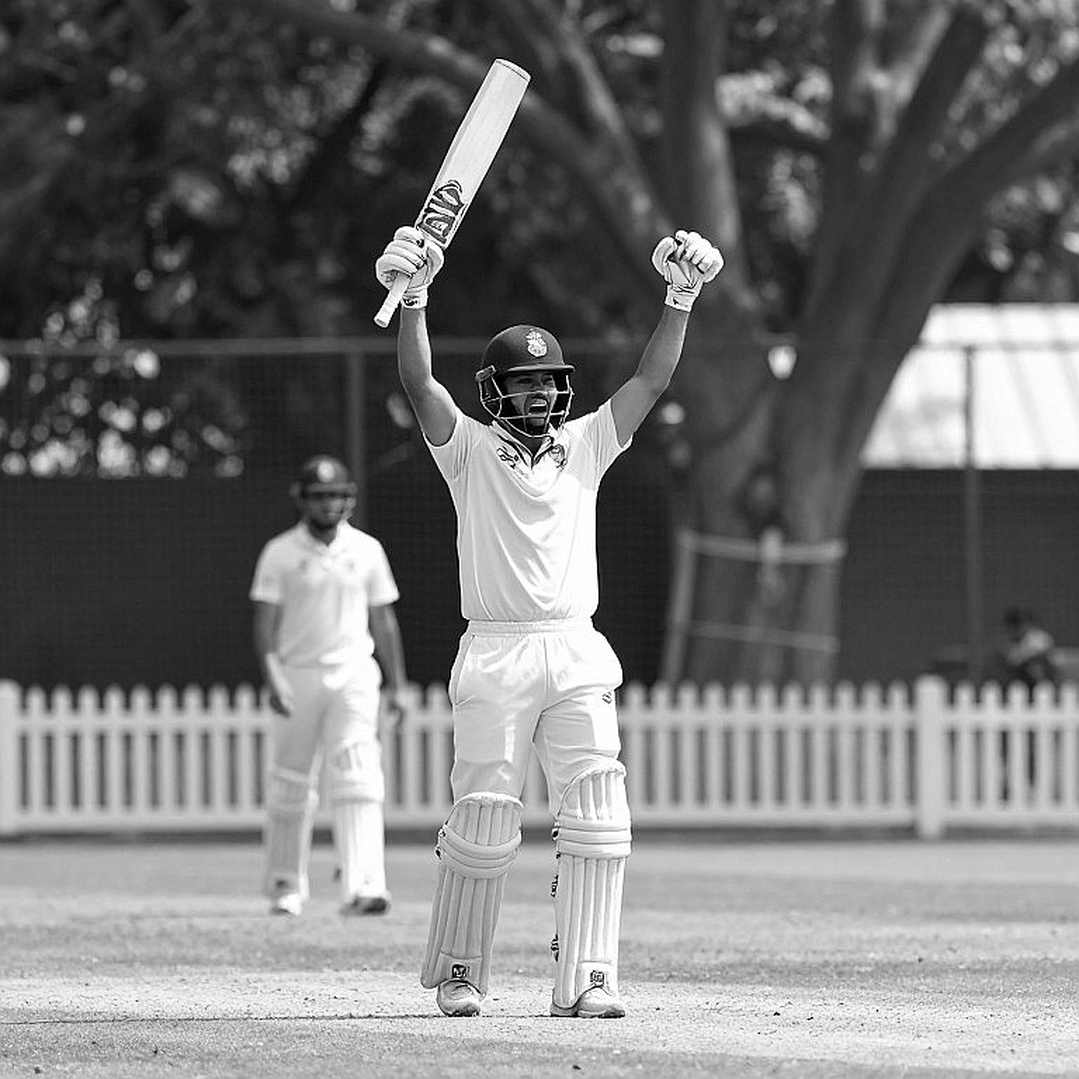
The real improvement in Bangladesh cricket will never come from one keeper's hip. It will come from a written clearance protocol: who runs the test, which format-specific test it is, whose desk the result lands on, and whether the player has any route of appeal. The third umpire has a protocol. Why shouldn't the keeper's hip?
The question is simple: this time, did the hip answer — or did the calendar?