
The Shifting Geography of Asian Cricket: A Revenue Empire, Power Politics and the Game's Real Challenges
एशियाई क्रिकेट पर यह विश्लेषणात्मक रिपोर्ट किसी एक मैच या श्रृंखला के बजाय क्षेत्रीय संरचना पर केंद्रित है। मुख्य बिंदु: (1) आईसीसी के 2023-27 राजस्व मॉडल में भारत का हिस्सा लगभग 38.5% बताया गया, जो आर्थिक और प्रशासनिक दोनों केंद्रीकरण को दर्शाता है। (2) आईपीएल के 2023-27 मीडिया अधिकार लगभग 48,390 करोड़ रुपये में बिके, और यही वैश्विक कैलेंडर का गुरुत्व-केंद्र है। (3) भारत-पाकिस्तान द्विपक्षीय श्रृंखला लंबे समय से स्थगित है; मुकाबले केवल बहुपक्षीय आयोजनों और हाइब्रिड मेज़बानी मॉडल के तहत होते हैं। (4) आईपीएल, डब्ल्यूपीएल, पीएसएल, बीपीएल, एलपीएल, आईएलटी20 और एनपीएल के विस्तार ने रोजगार बढ़ाया, लेकिन खिलाड़ी कार्यभार और अनापत्ति प्रमाणपत्र (एनओसी) विवाद भी बढ़ाए। (5) टेस्ट क्रिकेट और एसोसिएट देशों (अफगानिस्तान, नेपाल, ओमान, यूएई) के बीच संसाधन असंतुलन सबसे बड़ी संरचनात्मक चुनौती है। (6) 2028 लॉस एंजिल्स ओलंपिक में क्रिकेट की भागीदारी एशियाई टीमों के लिए अवसर है, लेकिन कैलेंडर टकराव पैदा करेगी। (7) सत्यनिष्ठा जोखिम 'अनुपस्थित' नहीं, बल्कि 'अप्रतिवेदित' माना जाना चाहिए। नोट: स्रोत विश्लेषण में ठोस तथ्य-बिंदु उपलब्ध नहीं थे; यह कैप्सूल क्षेत्रीय संदर्भ पर आधारित है और किसी विशिष्ट मैच परिणाम का दावा नहीं करता।
This analytical report is grounded in the broad regional context of Asian cricket. The source deconstruction available for this run contained no discrete factual points, so no claim is made here about any specific match, series, tournament or player. The discussion focuses on structural trends, economic architecture, governance tensions and publicly debated issues; where figures appear, they are widely reported approximations.
Asian cricket is passing through a contradictory phase. On one side it is the largest share of global cricket's economic activity — broadcast rights, franchise valuations, advertising markets and audience numbers all point the same way. On the other, this is the region that carries the sport's sharpest political tensions, its most unequal resource distribution and its most tangled calendar problem. That contradiction, rather than any single result, is the central story of Asian cricket today.
Over the past decade the centre of gravity has shifted from the field to the boardroom and the rights auction. The shift is neither good nor bad in itself, but its consequences are visible at every level of the game — from domestic structures to international scheduling, from junior cricket to the women's game.
The new geography of money
The most important fact about global cricket's economic architecture is that the Indian board is the largest shareholder in the ICC's revenue distribution. Under the model agreed for the 2026-27 cycle, India's share was reported at roughly 38.5 percent of the total pool, several times that of any other member. The arrangement rests on an economic logic — the Indian market generates the largest broadcast revenue — but its political consequence is that decision-making power tilts in the same direction.
Smaller and mid-tier boards have long been uneasy about this asymmetry. Their argument is straightforward: if international cricket is a shared product, its revenue should be shared on a shared logic, not purely on market size. The larger boards counter that revenue is generated where the audiences are, and audiences are where the competition is. Both arguments hold, which is precisely why the debate remains unresolved.
A quieter consequence of centralisation is the slow erosion of autonomy. When a large share of a board's income arrives from a central pool, its independent grip on the calendar, the number of tours and even competitive balance weakens. This happens not through conspiracy but as a natural product of financial dependence.
The gravity of the IPL
The single central force in Asian cricket is the Indian Premier League. Its media rights for the 2026-27 cycle sold for roughly 483.9 billion rupees, the largest figure ever recorded for any cricket league. That sum is not merely the earnings of one tournament; it is the gravitational centre of the entire global calendar.
The IPL's influence operates at three levels. First, the player: a strong season can transform both financial security and market standing. Second, the board: IPL revenue underwrites the Indian domestic structure, funding domestic cricket, the women's game and junior pathways at a level no other Asian board can match. Third, the global level: the IPL holds a fixed, protected window in the international calendar, and every other competition must find its place around it.
This third point is the most contested. The other leagues — the Pakistan Super League, Bangladesh Premier League, Lanka Premier League, ILT20, Nepal Premier League — struggle continuously to find a window. The problem is not only clashing dates; it is that the availability of the best overseas players is set by the IPL's schedule. A player who is unsold, or denied a no-objection certificate, becomes another league's attraction.
The permanent absence of India versus Pakistan
Asian cricket's oldest and most expensive political tension sits in the bilateral relationship between India and Pakistan. The two have not played a bilateral series for years, meeting only in multi-team ICC events or the Asia Cup. The absence is not merely a sporting loss; it is an economic opportunity that goes unrealised every year.
The tension has also produced new administrative solutions. Under hybrid hosting models, a tournament's hosting rights are formally awarded to one country while matches are played at neutral or third-country venues. The arrangement works in practice, but it has established a precedent in which the geography of major events is decided by politics rather than by the logic of the game.
The effect ripples through the South Asian ecosystem. Domestic cricket and the PSL in Pakistan do not receive the international visibility a market of that size should command; Indian audiences are denied a rivalry that has historically been the sport's biggest viewership driver. Both sides lose, and both sides rarely say so in public.
It is worth noting that the tension is not only bilateral. Hosting rights for global events, visa arrangements, security assessments and broadcast agreements are all points where sport and diplomacy dissolve into one another. In the preparation of any multi-team event, that uncertainty has become a permanent risk.
Proliferation of leagues and the weight of the calendar
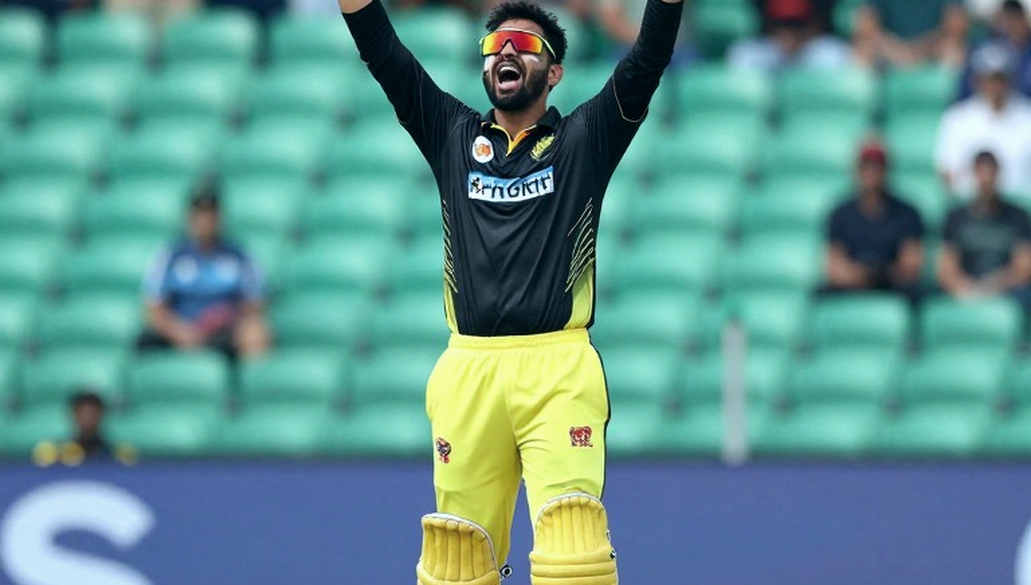
Franchise cricket has expanded across Asia at an extraordinary rate. The IPL and the Women's Premier League in India, the PSL in Pakistan, the BPL in Bangladesh, the LPL in Sri Lanka, ILT20 in the UAE and the Nepal Premier League mean that almost every significant cricket market in the region now has a franchise competition of its own.
The expansion carries three clear benefits. Employment: a professional cricketer now has more livelihood options than ever. Talent pool: players from smaller nations gain high-level competitive exposure that translates directly into international capability. Audience expansion: franchise cricket has built followers in markets where the traditional international game had limited reach.
It also carries three costs. Player workload: combining international commitments across three formats with several leagues produces a schedule with insufficient recovery time. The primacy of the national team: when a league's financial reward is a multiple of an international match fee, a player's priorities become hard to set. And audience fatigue: a continuous stream of tournaments creates noise in which every event matters less.
Boards have essentially one practical instrument here — the no-objection certificate. It determines which overseas league a player may join and which he may not. In principle it protects player welfare and national interest; in practice it is also a powerful bargaining tool, and its use has repeatedly raised questions of transparency.
The state of Test cricket
Test cricket is Asian cricket's weakest link, and the irony is that the region with the most money has the least room for the oldest format. The World Test Championship gave Test cricket a structure and a points table, but it did not remove the inequality of participation.
In practice, Asia's major teams play Tests regularly while the smaller sides — Bangladesh, Afghanistan, Sri Lanka — contend with irregular schedules. For Afghanistan a Test remains a rare occasion, even as its white-ball side has progressed markedly. The imbalance shows that the future of Test cricket is a question not of interest but of calendar and funding.
A second challenge is economic. A five-day match is attractive to broadcasters only when the contest is close. Where matches are one-sided, audiences fall, and when audiences fall the fixture becomes a loss-making proposition for the host board. That cycle is especially punishing for smaller boards with limited capacity to absorb losses.
The rise of the associates
The most encouraging story of recent years has come from the associate nations. Afghanistan is the clearest example: despite limited resources and unstable domestic conditions, it established itself internationally and reached the knockout stages of major tournaments, proving that talent and infrastructure are not inevitably linked.
Nepal's story is different. Its strength lies not in structure but in popular base. Cricket has grown there as a social movement, and its influence extends beyond international results into sporting culture itself. Oman and the UAE chose another route, investing in infrastructure and event capability, and are now permanent parts of the international calendar as neutral venues.
The limit of this wave is that associate cricket's funding still depends on the goodwill of the larger boards. ICC development funds and regional event support matter, but they are insufficient for long-term planning. Until associate nations can raise resources of their own, their progress remains fragile.
The new era for women's cricket
Women's cricket is the fastest-changing segment in Asia. The Women's Premier League gave the women's game in India an entirely new economic base, and the effect has not stayed within India. Participation in Asia Cup-level competitions has grown, and several Asian teams have begun prioritising the women's programme.
Yet the imbalance is deep. India and Sri Lanka have comparatively strong structures, while in several other Asian countries the women's game still struggles with limited opportunity. The gap is not only one of skill but of professional contracts, coaching and ground access. Until that gap narrows, regional competition cannot achieve the balance that drives the sport forward.
The Olympics and global expansion
Cricket's inclusion in the 2028 Los Angeles Olympics is a historic opportunity for Asian cricket, because Asian teams are comparatively strongest in that format. The opportunity is not only a medal but entry into a new, non-traditional market — particularly the United States, where cricket has so far been marginal.
But the opportunity has a condition: the calendar. Teams need preparation time, and that time must come from a schedule already filled with leagues and bilateral series. If the Olympics are prioritised, something else must give. That choice will be among the hardest boards face in the coming years.
Power and governance
A new dimension has entered Asian cricket's administrative structure, with significant change at the top of the ICC in recent years. That change underlines a simple fact: the administrative centre of global cricket and its economic centre now sit in the same direction.
Two conclusions follow. The positive one is speed: when financial weight and administrative responsibility rest with the same party, major decisions are less likely to stall. The negative one is that dissent weakens, because smaller boards have limited political and financial capacity to object openly.
The same asymmetry appears at regional level. Within the Asian Cricket Council too, decisions have tended to centre where economic weight is greatest. That is not unusual — it happens in sports federations worldwide — but it affects competitive balance, and competitive balance is what determines the game's long-term appeal.
Integrity and the shadow of betting
The integrity question is never entirely absent from cricket. Where there is big money there is a betting market, and where there is a betting market there is the risk of match-fixing and spot-fixing. The ICC's Anti-Corruption Unit monitors that risk and acts periodically.
The important point is that monitoring does not mean the risk is absent — it means the risk is managed. Reporting often creates the illusion that the absence of a public case means everything is well. In reality, integrity risk is most dangerous when it is invisible: when no complaint is filed, no report arrives, and the exposure quietly persists.
The hardest challenge today is the blurred boundary between illegal betting and fantasy sport. A fast-growing online market has outrun regulatory frameworks, and in many countries oversight remains incomplete. For sports bodies this is an area of limited jurisdiction but direct exposure.
The overall risk picture
The top risk is structural: the whole system depends on a handful of revenue sources, and the weakening of any one of them would affect the entire structure. Second is workload and injury risk, which directly determines the length of players' careers. Third is political risk, expressed in bilateral tensions that affect hosting and broadcast.
Fourth is governance risk: when decision-making is opaque, trust weakens, and no shared enterprise survives without trust. Fifth is the talent-supply risk: if domestic investment flows only to the centres where money already exists, the talent pool narrows and competition becomes one-sided.
The way forward
The real question for Asian cricket is not how to grow revenue — that is already happening. It is how to make that revenue sustainable. There are three obvious responses, and they are interlinked.
First, a reassessment of revenue distribution. This is a demand not against any particular board but for the stability of the system. When smaller boards are economically stronger they build better teams, and better teams produce better competition — which ultimately benefits the largest board too.
Second, scientific calendar management. This is not merely a matter of allocating dates; it is a matter of deciding how much space each format receives and how much rest each player gets. A clear, long-term and predictable calendar would achieve more than any other single reform.
Third, equal investment in talent development. Dedicated funds, coaching support and competition opportunities should be expanded for associate nations and domestic structures. This is not charity but long-term investment, because future audiences and future players will emerge where opportunity exists today.
Conclusion
Asian cricket is in the most prosperous phase of its history, and that prosperity is real — in numbers, in resources and in global influence. But every prosperous system carries a risk: it can be weakened by the very forces that made it successful. Centralisation has made decisions faster and dissent weaker. Commercialisation has multiplied resources and reordered priorities. Popularity has grown and patience has shrunk.
What is most needed now is restraint — not in revenue, but in the exercise of power. The sport that treats all its members as equal stakeholders is the one that endures. Asian cricket has a great deal to offer the world, on the field and off it. The only question is whether it wants to share it or merely accumulate it.