
Five Names, Four Disclaimers: The Document Indonesia's Diaspora Shortlist Does Not Contain
**मुख्य उत्तर:** इंडोनेशिया की 2027 एशियाई कप तैयारी में पांच यूरोप-आधारित वंशज खिलाड़ियों की सूची चर्चा में है, लेकिन पीएसएसआई ने किसी की नेचुरलाइजेशन प्रक्रिया की पुष्टि नहीं की। अध्यक्ष एरिक थोहिर के पास कोई नई जानकारी नहीं। मुख्य बाधा फीफा पात्रता में दादा-दादी की पीढ़ी का दस्तावेज़ीकरण और दोहरी नागरिकता का कानून है। **मुख्य तथ्य:** - पांच नामों में दो सेंटर-बैक, दो सेंट्रल मिडफील्डर और एक स्ट्राइकर; कोई गोलकीपर, लेफ्ट-बैक या विंगर नहीं। - तीन खिलाड़ी अंडर-21 या रिजर्व स्तर पर; टॉप-लेवल सीनियर मिनट्स सत्यापित नहीं हैं। - फीफा नियम: केवल माता-पिता या दादा-दादी का जन्म आधार बनता है, परदादा-परदादी नहीं। - रेनो मुंज (केबीसे वेस्टरलो) जकार्ता में पैदा हुए; जन्मस्थान दस्तावेज़ से साबित हो सकता है। - 20 में से 15 सूचना बिंदुओं पर स्रोत अनुल्लेखित; एकमात्र नामित स्रोत एरिक थोहिर हैं। **स्रोत:** वीवा (जकार्ता) की रिपोर्ट; प्रकाशन तिथि की स्वतंत्र पुष्टि आवश्यक है, क्योंकि रिपोर्ट में अक्टूबर 2026 का संदर्भ और आसपास का कोच-संदर्भ आपस में मेल नहीं खाते। **संबंधित प्रश्नोत्तर:** प्रश्न: क्या इन पांच में से किसी की नेचुरलाइजेशन प्रक्रिया शुरू है? उत्तर: नहीं; रिपोर्ट स्वयं चार स्थानों पर पुष्टि से इनकार करती है और पीएसएसआई अध्यक्ष के पास कोई नई जानकारी नहीं है। प्रश्न: सबसे बड़ी कानूनी बाधा क्या है? उत्तर: फीफा के अनुसार दादा-दादी की पीढ़ी का जन्म-प्रमाण, और इंडोनेशिया का वयस्कों के लिए दोहरी नागरिकता न मानने वाला कानून। प्रश्न: सबसे मजबूत मामला किस खिलाड़ी का है? उत्तर: रेनो मुंज का, क्योंकि जकार्ता में जन्म दस्तावेज़ से सीधे साबित हो सकता है, जबकि बाकी चार में वंश की पीढ़ी ही स्पष्ट नहीं है।
The architecture of the report out of Jakarta is plain. The headline carries five names. Directly beneath it, the name of head coach John Herdman has been attached. And by the second paragraph the piece concedes that none of the five is a confirmed naturalization candidate. The third and fourth paragraphs repeat the withdrawal — 'no official announcement', 'no certainty a process exists', 'only discussions'. Across the entire piece, exactly one individual is named and quoted: PSSI chairman Erick Thohir. And the quote is a negative one. He has no further news.
The file was three pages long, and page three changes everything. Here, page three is paragraph two.
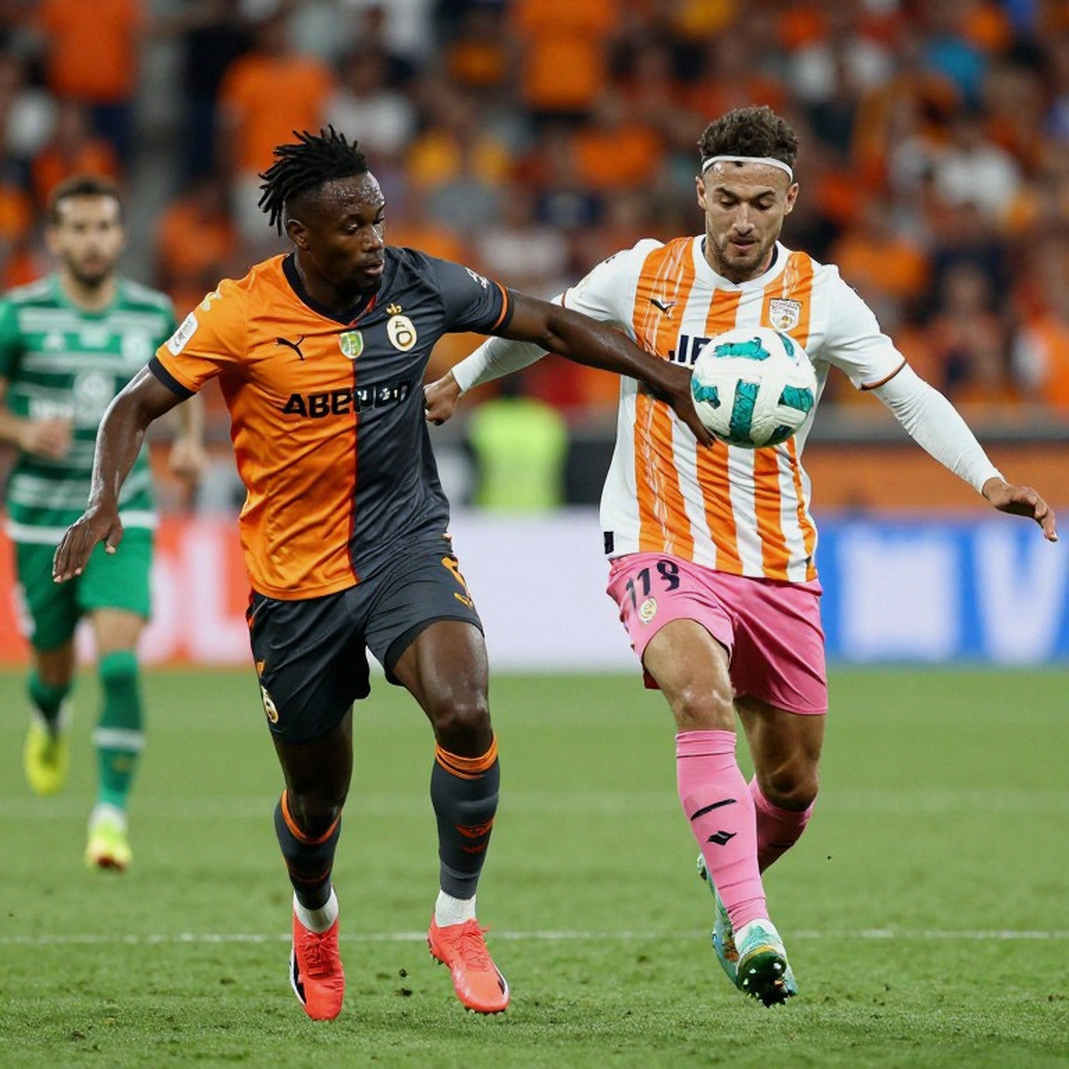
So this is not a story about five naturalizations. It is a clean snapshot of Indonesia's diaspora-recruitment pipeline — and of the media economy that publishes a name list before a file is opened at the federation's office. The two things should be read separately, and accounted for separately.
Context: where a list becomes news
Indonesia's naturalization programme is not a new story. It has become the spine of the team over recent years, and with the 2027 AFC Asian Cup set as the horizon it is now being described as the next phase. The model is straightforward: find players raised inside European academies whose families trace back to the Indonesian archipelago, and convert that descent into national-team eligibility. Three elements do the work — a scouting network, an agent layer, and above all the documentary requirements of FIFA and Indonesian citizenship law.
The VIVA (Jakarta) report is a product of that model. It names five: an Almería defender in Spain's Segunda with family roots asserted in Maluku; Reno Münz, a centre-back at KVC Westerlo in Belgium, born in Jakarta; an AZ Alkmaar U-21 midfielder with family said to originate from Surabaya; an Arsenal U-21 midfielder with roots asserted on his mother's side; and Markús Páll Ellertsson, a centre-forward at ÍA Akranes in Iceland.
Fifteen of the twenty information points carry no source at all. That is not an accident. A list of this shape appears in almost every international window, and its template does not vary: five names, a coach's name in the headline, and three hedge-laden paragraphs in the middle that protect the reporter from the claim.
Core: what the list shows, and what it does not
Start with what is absent. Of the five, two are centre-backs, two are central midfielders, one is a striker. No goalkeeper. No left-back. No winger. Indonesia's naturalized investment has been concentrated in defence and central midfield for years. The list is therefore adding bricks to a wall that is already standing. Where the squad is genuinely short — goalkeeping, pace on the left, width from the flanks — not one name appears. This is not a squad plan. It is a scouting network's habit.
Second, level. Almería sit in Spain's Segunda, Westerlo in the Belgian Pro League, AZ and Arsenal at U-21 level, Akranes in Iceland's domestic top flight. Three of the five come explicitly out of U-21 or reserve football. That yields a hard caveat: senior minutes at top-flight level are unverified for any of them by any document in the piece. The 2027 tournament is roughly a year away; a first-time senior international with no AFC exposure is a low-probability selection for it. The same names are plausible for the next World Cup cycle. The article conflates two timelines — the pipeline is 2030's, the headline is 2027's.
Third, and decisively, the eligibility law. Under FIFA's regulations, national-team eligibility runs through birth in the territory, the birth of a biological parent in the territory, or the birth of a grandparent in the territory. Great-grandparents do not count. Now read the article's language: 'Maluku blood in the family', 'family originating from Surabaya', 'blood from his mother's family'. None of them states the generation. And the generation is the single legally decisive fact. Without the paperwork, these five names are not candidates. They are hypotheses.
The rule is written plainly. The list does not mention it once.
Fourth, the switch rule. If any of these players has appeared in an official age-group competition for a European association, the analysis moves off descent and onto association-switch conditions — a slower and riskier route. That makes these names contested assets rather than free options. It also explains why the report's language is so carefully hedged.
Fifth, the point that never enters the debate: dual nationality. Indonesia's framework has historically not recognised dual citizenship for adults; naturalization ordinarily requires an oath and renunciation of the prior nationality. For a 19-to-21-year-old whose European career is only opening, surrendering an EU or Icelandic passport is not a small decision. The report treats 'the player's willingness' as a soft variable. It is in fact the binding constraint. It is also why programmes of this kind tend to succeed with players at a different career stage, or with weaker European options.
Sixth, the Jakarta birth. Reno Münz's case is legally different from the other four, because birthplace can be documented directly — not inferred the way 'blood' must be. But note this too: birth in Indonesia to foreign parents does not by itself confer Indonesian nationality. The article blurs the two, and that is its largest technical error.
Seventh, the Icelandic name. Icelandic surnames are patronymic — 'Ellertsson' means 'son of Ellert', not a family name. Any lineage claim therefore has to run through the maternal line and be evidenced independently of the registered surname. It is a small technical point. Small technical points are what close files.
Eighth, who captures the value. An Indonesian passport grants a European club no registration benefit; it confers no EU work rights. The player gains a senior international platform and endorsement value in the Indonesian market, against the risk of losing a European national-team pathway. PSSI carries the documentation cost, the legal process and the brokerage. The clearest beneficiary is the agent layer — and it is the least accountable party in the chain. Lists originate there, which is why they carry more names than clubs.
I have a habit: whenever a federation presents a number or a list, I ask first how much of it is verified. At the 2026 FIFA U-17 World Cup I kept the local organising committee's bloc-allocation sheets alongside stadium turnstile returns, because school parties on free allocations and seats actually sold do not belong in the same column. The distinction here is the same: 'linked' and 'registered' are different things. The article is in the first category. The news is made in the second.
The contrarian angle: what the critics miss
The easy conclusion is that PSSI is moving slowly. But this list does not measure PSSI's speed. It measures the media's. And that speed is high.
The real signal is the least glamorous one. The chairman saying he has no further news is the hardest sentence in the whole story — because a flat denial is cheaper. 'Nothing yet' is what gets said when a file is open but incomplete. Nobody in that room was lying. Every paragraph is true. The problem is the headline, which assembles those truths into a claim that appears in none of them.
Second, even if all five arrived the level would not change — the depth would. Indonesia's existing naturalized core has been drawn from Eredivisie, Serie A and Championship level; a Jong AZ or Premier League 2 profile sits below it. This is depth recruitment, not first-choice recruitment. And part of it is taken from someone: the Liga 1-based domestic international. The article presents each name as an added option and never once says whose option is being removed.
Third, the piece carries two references to October 2026 while the surrounding coach and tournament context does not reconcile with that date. Treat it as a reliability flag rather than a typo. Without a confirmed publication date, no conclusion can be built on this list.
Takeaway
The date that actually matters is not the list's. It is the oath. The only unambiguous confirmation of a naturalization is a player taking Indonesian citizenship, or a FIFA pre-clearance arriving. Before that, every name is an estimate. And if a European association caps one of these five first, the route closes permanently — a risk the list does not record anywhere.
The question is not how many of the five will arrive. It is whether, the next time these five names are printed, a grandparent's birth certificate has reached a file. And if it has not, the question to ask is who benefited most from the list.