
Abhishek Sharma: The 113 off 38 — Testing the 'Fear' Narrative Against the Numbers
अभिषेक शर्मा की वेलिंगटन में 38 गेंदों पर 113 रन की पारी (स्ट्राइक रेट ~297, 9 चौके, 11 छक्के) वास्तव में असाधारण है, लेकिन 'फ्लैट-ट्रैक बुली' की आलोचना का खंडन आंकड़ों से नहीं, दावे से किया गया है। पारी के 90.3% रन केवल बाउंड्री से आए — यह उच्च-विचलन वाला प्रोफाइल है। मैच का नतीजा, टॉस, पिच रिपोर्ट और आउट-पैटर्न का डेटा अनुपस्थित है। करियर के आंकड़े (33.33 औसत, 196 स्ट्राइक रेट, 71 टी20 में 4 शतक) को आईसीसी/ईएसपीएनक्रिकइन्फो से सत्यापित करने की जरूरत है — विशेषकर क्या 196 करियर स्ट्राइक रेट है या हाल की अवधि का। 26 वर्ष की उम्र में एक भी वनडे या टेस्ट कैप न होना सबसे बड़ा करियर-पथ जोखिम है। नंबर एक आईसीसी रैंकिंग फॉर्म का सूचक है, स्थायी प्रभुत्व का नहीं। असली कहानी 'आलोचकों को चुप कराना' नहीं, बल्कि यह है कि भारत ने एक विश्व-स्तरीय टी20 पावरप्ले संपत्ति पैदा की है जिसका बहु-प्रारूप भविष्य अनसुलझा है और जिसका व्यावसायिक मूल्य खेल-प्रमाण से आगे चल रहा है।
First the Innings, Then the Narrative
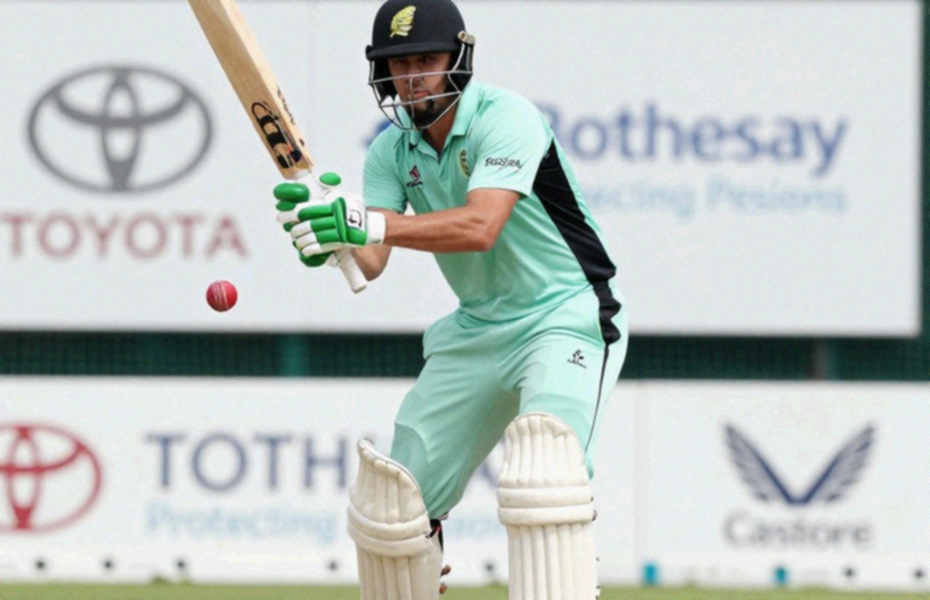
New Delhi. For several years, a question has circled Indian cricket: is Abhishek Sharma merely a star of the IPL's flat pitches, or can he become a genuine headache for bowlers at the international level? The 113 off 38 balls at Wellington on India's tour of New Zealand is being read as an answer. After that knock, Abhishek regained the No. 1 spot in the ICC T20I batting rankings, and Indian media began announcing the birth of a 'new cricket icon'.
But this entire narrative has a fundamental weakness: its entire evidentiary base rests on a single innings. 'Fear of bowlers', 'silencing critics', 'new icon' — every claim traces back to one 38-ball knock plus a ranking position. In T20 cricket, a single innings carries extremely high variance. One flat surface, one poor bowling plan, or one dropped catch can generate a big scoreline. The match result, the series context, the opposition bowling strength, or the toss outcome — none of this is supplied. This is the central evidential gap of the piece.
The Innings on the Scales of Data
The innings numbers are clear: 113 off 38 balls, strike rate around 297. Twenty of the 38 deliveries were hit for four or six — 52.6 percent of the balls faced crossed the boundary rope. Nine fours and eleven sixes, twenty boundaries in all.
The other side matters just as much. Of the 113 runs, 102 — 90.3 percent — came purely from fours and sixes. On the remaining 18 balls, only 11 runs came, a strike rate of around 61. This is an innings with very low rotation of strike and an almost purely boundary-dependent score.
In cricketing language this is called 'boundary dependency'. It means the batter's entire output runs on a mechanism that can collapse the moment conditions change. When the bowling plan shifts, when the wicket slows and the ball stops coming onto the bat, there is no secondary scoring route visible in this innings. In T20 this is a valid and occasionally brilliant skill expression, but it is precisely the statistical signature most vulnerable to a change in conditions.
The Wellington Factor: The Sword Cuts Both Ways
Wellington is away for India, and a venue where wind is a structural variable and early seam and swing are common. The title of the piece itself concedes the surface question — 'whether there is grass on the wicket or not'. That means the pitch was contested, yet the report offers no pitch report, no batting-friendliness data, and no comparative strike rate for the other batters in the match.
Here is an interesting point. If the surface genuinely assisted seam and swing, the innings is strong counter-evidence to the 'flat-track bully' charge — and this is a real point in Abhishek's favour that the piece under-uses. But if the surface was flat, the innings confirms the charge. The piece asserts the former and offers no data to rule out the latter.
So the 'grass or no grass' framing is a defensive rhetorical device, not a demonstrated fact. It pre-empts the strongest criticism rather than answering it. A rigorous rebuttal would have required a split of his strike rate and dismissal pattern on seaming versus flat surfaces — which is nowhere in the report.
The 'Flat-Track Bully' Charge: Retired or Postponed?
The most common criticism of Abhishek has been that he scores heavily on flat, batting-friendly pitches but struggles when the ball seams or swings. The piece labels this 'a criticism of the past' and asserts it has been 'largely changed'.
But the question is: changed how? One away innings, whose surface, result and conditions are all unconfirmed, does not statistically refute a conditions-based criticism. Mohammad Kaif's public statement — 'stop saying that' — is an emotional appeal, not a data rebuttal.
Let this be clear: the flat-track bully charge has not been retired, it has been postponed. Retiring it would require (a) split strike rates on seaming versus flat surfaces, (b) home-versus-away averages, (c) dismissal-mode distribution — how often bowled or LBW playing across the line, how often caught in the deep. None of these is in the report.
Interestingly, the criticism's framework is not wrong. A 196 strike rate with 90 percent boundary dependency is an inherently high-variance profile. The flat-track question is the correct diagnostic to ask of this exact profile. The criticism is not unfair in structure, only unproven in application.
The Career Numbers: A Strict Need for Verification
The career figures quoted are: an average of 33.33, a strike rate of 196, four centuries in 71 T20 matches, 2,267 runs. These are extraordinary figures in themselves, but they need to be verified seriously.
Some things are mathematically consistent. An average of 33.33 and a strike rate of 196 implies roughly 2,267 runs across about 68 innings, or roughly 1,157 balls. The figure is internally consistent. But 71 T20I caps for a 26-year-old who has not yet played a single ODI or Test is unusually high.
One possibility is that the figure conflates T20I-only data with broader T20 career data, or that 196 is a 'recent window' strike rate rather than a career rate. That distinction matters enormously. If 196 is a career strike rate, it is an extremely rare figure in men's T20I history. If it is a 12-month figure, the entire 'sustained dominance' reading collapses.
That is why it is essential to cross-check these figures against ICC and ESPNcricinfo records. Every downstream interpretation — whether of 'fear' or of 'new icon' — depends on this verification.
Technique: Expert Testimony Versus the Absence of Data
What the report says about technique rests on expert statements. Former Pakistan captain Salman Butt says Abhishek takes 'calculated risk, not slogging'. The author himself says there is 'precision' behind his aggression.
These expert comments matter, but they are not statistical. Proving the technical claim would require: (a) dismissal-mode distribution, (b) scoring splits by delivery type — short ball, full ball, spin, left-arm pace, (c) performance by venue. None of it is available.
One more point: Salman Butt is a former captain whose career ended in the 2026 spot-fixing case. His technical opinion is legitimate commentary, but when a piece leans on a very small number of expert voices, the 'institutional weight' of those voices becomes a relevant source-grading factor. This is a comment on sourcing quality, not on the accuracy of his specific technical point.
The No. 1 Ranking: An Indicator of Form, Not Status
Abhishek has regained the No. 1 spot in the ICC T20I batting rankings. This is a real achievement, but its mechanism must be understood.
The ICC ranking is a weighted system that places heavy emphasis on recent performances and adjusts for opposition strength and match volume. That means a single big series can move a player to No. 1 without a multi-year record — which is precisely what 'regained the top spot' describes.
So let it be stated plainly: the ranking is evidence of recent form, not of sustained dominance. It is a perishable asset. It can be lost within a single series. The tag of 'the world's number one batter' is only as durable as the performance behind it.
The Team Landscape: When Even No. 1 Doesn't Guarantee a Place
India's T20I top order is arguably the deepest in world cricket. Sanju Samson and Vaibhav Suryavanshi are named as competitors for the same slots — a queue of international-calibre players exists.
Sharda Ugra's statement is the most revealing sentence in the piece: 'Everyone thought Vaibhav was going to be the next superstar, but Abhishek came and snatched that place.' That sentence makes plain that the Indian star-making system runs on a 'displacement' model, with a single superstar slot whose occupant is determined by recency, not career accumulation.
This is a question of selection policy, not talent supply. When the world's No. 1 ranked batter is seen fighting for his place, the constraint is selection policy, not talent supply. This structurally suppresses the value of any individual 'hot streak'.
The generational-handover framing around Rohit Sharma and Virat Kohli is directionally correct but premature. It is true that the window for generational transition is open. But whether Abhishek is the 'designated successor' is not established by one innings and one ranking position. 'He broke down the door' is a narrative device, not a selection fact.
The ODI pathway is also unresolved and openly contested. Mohammad Kaif's public demand — that Abhishek be given an ODI cap — shows this is a live selection debate, not a settled matter.
IPL and the Commercial Side: Running Ahead of the Game
Abhishek's IPL journey has gone from Delhi Capitals to Sunrisers Hyderabad. The piece says he found 'his true identity' in Hyderabad, where his opening partnership with Travis Head 'decides the fate of the match in the first six overs'.
This is the most useful technical insight in the entire piece. The partnership identifies his actual cricket value: powerplay run-rate inflation. That is a real, quantifiable, highly-prized T20 skill — but it is a role value, not a format-transcending value.
But a fundamental structural point is missed: IPL success is itself the primary engine of both the commercial value surge and the public-expectation surge described in this piece. And IPL conditions — flat surfaces, short boundaries, franchise-optimised roles — are systematically more batting-friendly than away T20I conditions. That is exactly how 'flat-track' reputations are made.
And here is an important distinction the piece blurs: 'fear for bowlers' (sporting value) and 'attractive to advertisers' (commercial value) are presented as one continuous narrative. The piece has to insist that 'his real identity remains his bat, not off-field glamour' — an assertion that only needs making when the opposite is the visible trend.
One clear caveat for commercial valuation: the report gives no IPL auction price, no salary, no retention status, no contract length. So any 'premium' analysis would be speculation and is withheld here. If a premium exists, its likely drivers are two: (a) a scarce archetype — a left-handed, Indian, powerplay-destroying opener, a globally thin category; and (b) brand premium — young, photogenic, marketable. Both are commercial-value factors, not sporting-value factors.
Risk: The Career-Shape Problem
There is no governance, integrity, or financial risk signal in this piece. That should be said explicitly. The risk is concentrated in two places.

First, career-path risk. At 26, the world's No. 1 T20I batter, but not one ODI or Test cap. The longer this persists, the harder the format transition becomes. This is the most under-reported risk, because it is not a performance risk but a career-shape risk. Being the best in the world at one format while uncapped in the other two is a stable outcome only if the format landscape stays as it is. It will not: ODI World Cups and World Test Championship cycles will continue to define legacy and central-contract value.
Second, narrative-backlash risk. 'Arrival of a new star', 'India's new cricket icon', and the Gavaskar-Tendulkar-Kohli-Rohit lineage construction place Abhishek inside Indian cricket's most heavily loaded comparison framework. The historical fulfilment rate of that framing is very low. Most of those handed the tag of 'next Sachin' or 'next Kohli' have not carried the pressure. The piece invokes this framework fully, and offers no hedge.
Third, medium risk — boundary-dependent scoring. 90 percent boundary dependency means that on slower, lower-bounce surfaces where the ball does not come onto the bat, his output can drop disproportionately. This is the concrete mechanism behind the 'flat-track' criticism, and the piece does not address it.
Fourth, medium risk — selection displacement. Samson and Suryavanshi are named competitors, and India's top order is a surplus market.
Fifth, unassessable — injury and workload. The report has no injury history, no balls/minutes workload data, no schedule-density figures. This is a genuine blind spot, especially notable for a piece eager to discuss commercial upside.
What Is Not Said Is Also a Story
The report withholds several important pieces of information, and their absence is itself a signal.
The match result is not given. Whether India batted first or chased is not stated. The series score is not given. There is no assessment of the opposition bowling quality. Toss, DLS, dew, weather — no data. No pitch report.
This is notable because withholding the match result from a piece built on one innings is unusual. Two possibilities emerge: either the result did not suit the narrative, or the piece is based on wire-agency source material and these facts were not included in the rush.
The report's structure points to the same thing. It follows a predictable 'post-innings wire report' template: AFP-sourced commentary + former-player reactions + career summary. That means it was assembled rapidly rather than researched.
The Most Credible Voice Is the One Making the Most Modest Claim
The piece has several voices. But their credibility differs clearly.
Daryl Mitchell's (New Zealand batter) reaction is the most balanced: 'some of his shots were world-class... well played.' That is a specific, bounded, in-the-moment assessment. It does not say Abhishek is a future great. It is praise of the innings, not a forecast of the career.
By contrast, Sharda Ugra's 'new-generation superstar' and the author's 'broke down the door' are unbounded claims. They leap from one innings to the next decade.
Yuvraj Singh's mentorship is an interesting industry signal. A former elite left-handed all-rounder mentoring a left-handed power hitter through the COVID lockdown is a replicable development model. It has a much longer half-life than one innings. But it is an industry signal, not sporting proof.
There is also a quote attributed to Yuvraj — 'I cannot score a century in 30 or 34 balls'. The implication is that Abhishek's century came in roughly 30-34 balls, which would place it in record territory for men's T20I centuries. But the piece never states the ball count for the hundred, only for the innings. That is another evidential gap.
The 'Fear' Question: Is It Really New?
The headline claims that Abhishek has created 'fear' in bowlers' minds. That is a strong emotional claim, but how is it measured?
In real cricketing language, 'fear' means: bowlers changing their plans against him, adopting more defensive lines and lengths, or deploying an extra fielder to stop him in the powerplay. There is no measurement of this in the report.
What is there is an innings with 20 boundaries. That is undeniably impressive. But 'fear' is a durable condition, not the outcome of one innings. 'Fear' is proven when opposition teams systematically change their strategy against him, and he answers the changed strategy too.
Here is the most important fact: despite 71 T20 matches and four centuries, Abhishek has not one ODI or Test cap. That means every data point is confined to the format with the shortest feedback loop and the widest variance. A player with a 196 strike rate and four centuries but no ODI cap strongly suggests the Indian team management has decided his game does not currently translate to 50-over tempo, or that the ODI top order is simply full.
Conclusion: Innings Brilliant, Claims Incomplete
The essence of this report is this: the 113 off 38 balls at Wellington is genuinely extraordinary, and the away-venue context is a real point in his favour. Twenty boundaries and a 90 percent boundary-derived score is a rare skill expression.
But the conclusions being drawn from this innings run far ahead of the data. The 'flat-track bully' criticism is answered as an assertion, not as a demonstration. No split data, no pitch report, no match result, no dismissal pattern. The career figures demand independent verification.
The real story is not 'he silenced the critics'. The real story is: India has produced a world-class T20 powerplay asset whose multi-format future is entirely unresolved — and whose commercial value is being priced ahead of that resolution.
This is a reminder for sports journalism: a brilliant innings is a brilliant innings. It is not a career. Making it a career requires time, innings, and conditions — and until those arrive, words like 'fear' and 'icon' run faster than the numbers.
The purpose of this report is not to diminish any player's potential. Abhishek Sharma is 26, the talent is obvious, and he stands at the threshold of the batting peak (27-33). If the technical base is real, the next 5-6 years could be his maximum-output window. But that window will be recognised when he performs in conditions not yet tested. Until then, the numbers stand as open questions, and the story runs ahead of them.
— Report ends —