
HK Sixes 2026: Six-time champions Pakistan crash out in group stage as UAE's unbeaten run ends title defence
HK Sixes 2026 में छह बार की चैंपियन पाकिस्तान ग्रुप C से बाहर हो गई। UAE ने दोनों मैच जीतकर शीर्ष स्थान हासिल किया, जबकि पाकिस्तान ने एक जीत (भारत के खिलाफ) और एक हार (UAE के खिलाफ, आखिरी गेंद पर एक विकेट से) के बाद दूसरा स्थान पाया। नियम के अनुसार केवल ग्रुप विजेता ही Cup सेमीफाइनल में पहुंचता है। पाकिस्तान अब शनिवार को हांगकांग के खिलाफ Plate सेमीफाइनल खेलेगा (11:15 am PKT / 2:15 pm हांगकांग समय)। मुख्य कारण: UAE के खिलाफ पहले मैच की आखिरी गेंद, जिस पर रन बन गए। छह-ओवर, छह-खिलाड़ी प्रारूप में उच्च अस्थिरता के कारण एक गेंद पूरे टूर्नामेंट का भाग्य बदल सकती है।
For Pakistan cricket, the Hong Kong Sixes has been a stage where six title wins are recorded. But in the 2026 edition, that same team was eliminated at the group stage of the very tournament it had dominated. On Friday night, once all Group C matches concluded, the picture was clear—UAE at the top with two wins, Pakistan second with one win and one loss, and India third with two defeats. The rules are straightforward: only the group winner advances to the main "Cup" semi-final.
It is nothing short of irony that Pakistan hammered India—chasing down 91 runs in just 3.5 overs with two wickets down—yet still saw its main trophy campaign end. The reason lay in its opening match, where UAE had snatched a one-wicket victory off the final ball.
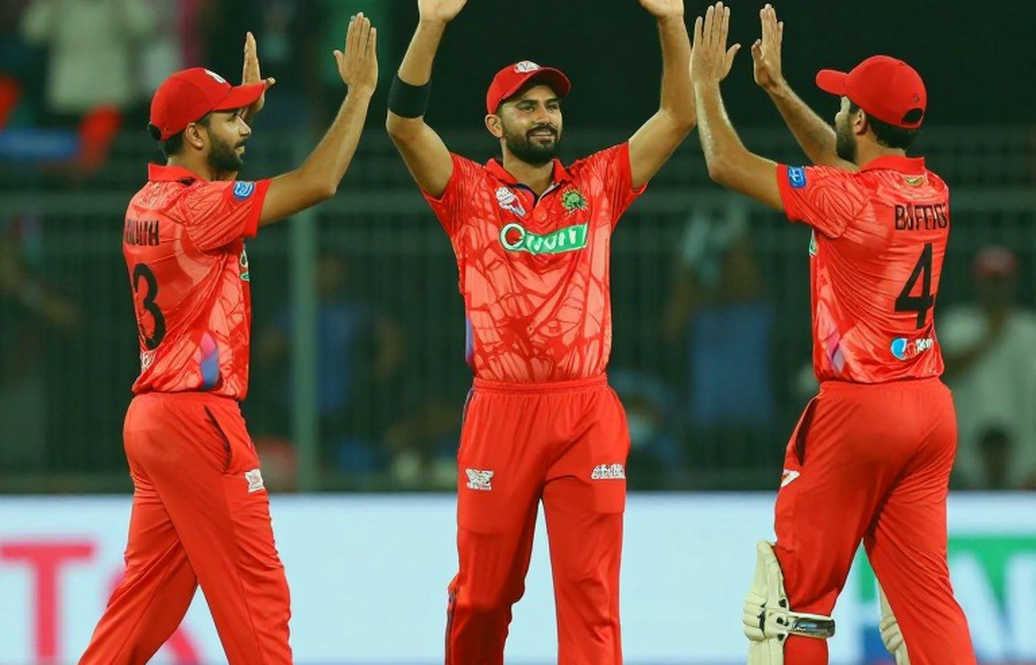
The first match: one ball that changed everything
Batting first against UAE, Pakistan posted 106 for three in six overs. Captain Abbas Afridi struck 53 and Khawaja Nafay added 41. This figure may look odd to readers unfamiliar with the mandatory 31-run retirement rule in Hong Kong Sixes cricket. By rule, any batter must leave the field immediately upon reaching 31 runs but can return later. So a 53 and a 41 summing up within a team total of 106 is not an error—it is a product of this specific format.
In reply, UAE stretched the game to the final delivery and sealed a one-wicket win with 107 runs. In a six-player team, "one wicket" means five wickets lost—a direct comparison with the conventional ten-wicket version can create confusion. That single ball decided the fate of Pakistan's entire tournament. Had that final delivery been defended, Pakistan would have sat at the top with two wins and kept its title defence alive.
A big win over India, but no benefit
In the second match, India batted first and made 88 for five. Pakistan chased down the 89-run target in just 3.5 overs with two wickets down—closing the game with a boundary. It was a fast and aggressive performance, and under Abbas Afridi's leadership the team showcased its batting firepower. But it had little decisive impact on the group table, since UAE had already reached the top with wins in both of its matches.
UAE stuns India
The most startling result of the group came between UAE and India. India made 95, and in reply UAE reached 96 without losing a single wicket in just four overs. In other words, they chased at roughly 24 runs per over—a figure that borders on impossible in 50-over or T20 cricket, but is simply the nature of the game in six-over format. That win sealed UAE's top spot and pushed Pakistan down to second. It is worth noting that Pakistan slipped to second not after its match against India, but after UAE defeated India—meaning the table position kept shifting until the final match.
What lies ahead
Pakistan will now play the consolation-tier "Plate" semi-final against Hong Kong on Saturday. The match is scheduled for 11:15 am PKT (2:15 pm Hong Kong local time). The tournament structure is divided into three tiers—Cup, Plate and Bowl—and for a six-time champion side like Pakistan, playing in the Plate is naturally a major disappointment.
Analysis: the price of one ball
The most important part of this story is what lies beneath the surface. Pakistan's entire campaign hinged on one ball—the final delivery against UAE. Had that ball not yielded a run, the team would have finished on top and the entire group arithmetic would have changed. This is not hyperbole but a structural feature of the format.
The Hong Kong Sixes format naturally produces high variance: six overs, six players, and each bowler gets a maximum of one over. This means a single player can leak 20-plus runs in one over or turn the match on its head. Therefore, the headline "six-time champions eliminated" carries a much lighter analytical weight than the same sentence would in a 50-over or T20 event, where the sample is larger and luck plays a smaller role. The gap between reputation and actual performance in this format is very narrow.
That is precisely why labels like "dominant victory" or "comprehensive win" have limited discriminating power here. The technical gap between the same team that thrashed India and the one that lost to UAE by one wicket may be only one or two overs. Judging a team's "true level" from a three-match sample would be misleading.
Serious gaps in reporting
The biggest shortcoming of this coverage is that while it explains the losing team at length, it barely tells the victor's story. UAE won both matches and finished on top of the group, yet not a single one of its players is named. This is a serious imbalance in cricket reporting—the winner received no adjectives, while the loser received all of them. Pakistan drew six complimentary modifiers—"dominant", "emphatic", "quickfire", "aggressive", "comprehensive"—while UAE got only "remarkable" and "dramatic". This reveals a fully Pakistan-centric framing, in which UAE's achievement was reduced to a footnote of Pakistan's failure. The win over India got its own paragraph, while the decisive UAE match was thin on detail—no bowling description, no name of who bowled the last over, no name of who scored the winning runs.
The second major gap is the absence of toss details, both teams' line-ups, bowling figures, and net run rate—standard cricket reporting elements. NRR did not influence the ranking this time, but it is part of the standard package. There is also no reaction from Abbas Afridi or the Pakistan Cricket Board (PCB), which would be expected in a report on a major setback.
It is also unclear whether Pakistan fielded a full-strength side or whether this was an experimental tour. Both Abbas Afridi and Khawaja Nafay are considered current or emerging national players. If this side was built to test youngsters, then the entire "title defence failed" framing would need recalibration. This is an inference—no evidence for it was provided in the report.
Verifying the title claim
The claims of "six-time champions" and "defending champions" are left without any source. This is a single-source historical claim that should be independently confirmed through Hong Kong Sixes official records or the PCB. The scorelines and group arithmetic reviewed so far show no contradictions—everything is internally consistent. Pakistan's 106/3 against UAE and UAE's 107 in reply requires a run rate of roughly 17.8 across six overs, which is feasible in this format. Pakistan chasing 89 in 3.5 overs against India is also logical. UAE's 96/0 in four overs looks extreme, but not inconsistent with six-a-side cricket. There is no error in the group ranking either—UAE winning both matches meant NRR was never needed.
Still, the "six-time champions" claim is the one element that could overturn the premise of the entire report, and without verification the story remains incomplete.
Conclusion
Pakistan's elimination is not merely the result of a single match but a direct consequence of this short format's structure, where one ball can swing the fate of a whole tournament. The team now has a chance to prove itself in the Plate semi-final against Hong Kong. But the larger question remains—is it possible to fairly assess a champion in a format with this much volatility? Is one ball deciding a tournament's fate the essence of the sport or its weakness? And most importantly—did UAE get the credit it deserved, or was its win recorded only in the shadow of Pakistan's failure?