
Asian Cricket
The Arithmetic of a Single Reserve Day: Who Owns Asian Cricket's Calendar
**मुख्य उत्तर** एशिया कप 2023 में हाइब्रिड मॉडल के तहत पाकिस्तान मेज़बान रहा, लेकिन 13 में से केवल 4 मैच पाकिस्तान में खेले गए और 9 श्रीलंका में। भारत-पाकिस्तान सुपर फ़ोर मुक़ाबले को टूर्नामेंट का एकमात्र अतिरिक्त (रिज़र्व) दिन मिला, जबकि फ़ाइनल के लिए कोई अतिरिक्त दिन नहीं था। **मुख्य तथ्य** - 15 जून 2023 को एशियाई क्रिकेट परिषद ने हाइब्रिड मॉडल की घोषणा की; पाकिस्तान में 4 मैच खेले गए। - 2 सितंबर 2023 को पल्लेकेले में भारत-पाकिस्तान ग्रुप मैच बिना रिज़र्व डे के बारिश से रद्द हुआ। - 11 सितंबर 2023 को कोलंबो में सुपर फ़ोर के लिए रिज़र्व डे का इस्तेमाल हुआ; भारत 228 रन से जीता। - 17 सितंबर 2023 के फ़ाइनल में श्रीलंका 50 रन पर ढेर; मोहम्मद सिराज ने 6/21 लिया। - 10 नवंबर 2023 को श्रीलंका क्रिकेट बोर्ड निलंबित, 28 जनवरी 2024 को बहाल। **स्रोत** एशियाई क्रिकेट परिषद की विज्ञप्ति, 15 जून 2023; मैच स्कोरकार्ड, 17 सितंबर 2023; अंतरराष्ट्रीय क्रिकेट परिषद का निलंबन बयान, 10 नवंबर 2023 | Cross-checked: cricsultan.com **संबंधित प्रश्न-उत्तर** प्रश्न: क्या 2025 चैंपियंस ट्रॉफ़ी में भी यही मॉडल लागू हुआ? उत्तर: हाँ, भारत के सभी मैच, जिनमें 9 मार्च 2025 का फ़ाइनल भी शामिल था, दुबई में खेले गए। प्रश्न: भारत और पाकिस्तान के बीच आख़िरी द्विपक्षीय श्रृंखला कब हुई? उत्तर: आख़िरी द्विपक्षीय सीरीज़ दिसंबर 2012 में पाकिस्तान के भारत दौरे के रूप में खेली गई थी। प्रश्न: रिज़र्व डे का विवाद क्यों उठा? उत्तर: बांग्लादेश के कोच चंडिका हथुरुसिंघा ने सार्वजनिक रूप से सवाल उठाया कि केवल एक मैच को अतिरिक्त दिन क्यों मिला, जबकि नियम सब पर समान होने चाहिए।
COLOMBO, 11 September 2026. The board outside the R. Premadasa Stadium said, in effect, that today's play was yesterday's leftover. Of the thirteen matches in the Asia Cup, exactly one had a spare day written into the calendar — India against Pakistan, Super Four. Rain stopped the match on the evening of 10 September, and the following day had already been reserved for it.
Six days later the final was played on the same ground. It had no spare day. Sri Lanka were bowled out for 50 in 15.2 overs — Mohammed Siraj took six for 21 — and India chased it in 6.1 overs. The entire final lasted 21.3 overs. A continental decider consumed fewer overs than a modern T20 innings takes to set itself up.
That evening I wrote one line in my pocket notebook: the calendar already knew, before a ball was bowled, which match deserved protection from rain and which did not. This is not a complaint about sporting fairness. It is the most honest line on the document that framed the 2026 Asia Cup.
The public argument about Asian cricket usually stops at what happens on the field — a boundary, a wicket, a controversy. The schedule sits outside that frame. And the space a fixture was not given is the clearest sentence this system speaks.
The shape of that tournament did not arrive by accident. Early in 2026 the Indian board made clear its team would not travel to Pakistan. The Pakistan Cricket Board held the hosting rights and had no reason to surrender them. The compromise between the two was called the hybrid model, announced by the Asian Cricket Council on 15 June 2026. In plain terms: Pakistan remained host, four matches were played there — Pakistan against Nepal in Multan on 30 August, and Pakistan against Bangladesh in the Super Four at Lahore on 6 September among them — and the other nine were played in Sri Lanka. All of India's matches were in Pallekele and Colombo.
The ACC is not an international federation of the Olympic kind. It is, functionally, a revenue-sharing arrangement among Asia's full-member boards, with a fixture list attached. From 2026 to 2026 its presidency sat with the secretary of the Indian board. That fact is not a revelation; it matters only because it tells you the reasoning behind decisions. Under the ICC's 2026-27 cycle, India receives around 38.5 per cent of the revenue pool. A board with that weight has calendar power in the same proportion.
I have watched Asian cricket from press boxes and commentary booths for twenty years. In 2026, calling matches for All India Radio from Hyderabad, I did not yet understand that a fixture's schedule can speak louder than its cricket. On 2 April 2026, from the Wankhede press box, I watched how the winning team's noise travels and how the losing dressing room's window shuts. On 6 April 2026 in Dhaka I saw the same thing again. What those two evenings taught me is that no cricket decision is taken only on the field; a part of it was settled in a boardroom first.
The hybrid model is generally described as a political compromise. I read it as a price. When a thing cannot be sold whole, it gets broken into parts and sold — hosting rights, venue, the spectator's claim. That is what happened in 2026. Pakistan kept the title of host, but its most valuable product was not sold inside its own market. India kept the power to decide where it played, and chose what suited its broadcast and advertising market. The boards at the centre of nothing — Sri Lanka, Bangladesh, Afghanistan — were handed the labour of hosting without the upside.
Look at the single reserve day through the same lens. Thirteen matches, rain a threat to all of them, and the extra day goes to the one fixture with the highest broadcast value. This was not a hidden conspiracy; it was an open priority. Bangladesh's coach Chandika Hathurusingha asked publicly why only one match got that protection. His question was not technical. It was structural, and it received no answer, because answering it would mean admitting the tournament's rules are not uniform.
In the group stage, India and Pakistan were washed out at Pallekele on 2 September 2026 — India had reached 266 in 48.5 overs and Pakistan never batted. No reserve day. Eight days later the same two teams met in Colombo, where a reserve day existed, was used, and India won by 228 runs, Virat Kohli unbeaten on 122 and KL Rahul on 111. One pair of teams, one tournament, two sets of rules. It is hard to find a cleaner proof that a calendar is not neutral.
The principle did not stay in 2026. The 2026 Champions Trophy was hosted by Pakistan while all of India's matches, including the final on 9 March 2026, were played in Dubai. The same device, applied twice in two years, both times described as a temporary arrangement. An arrangement repeated twice is a system.
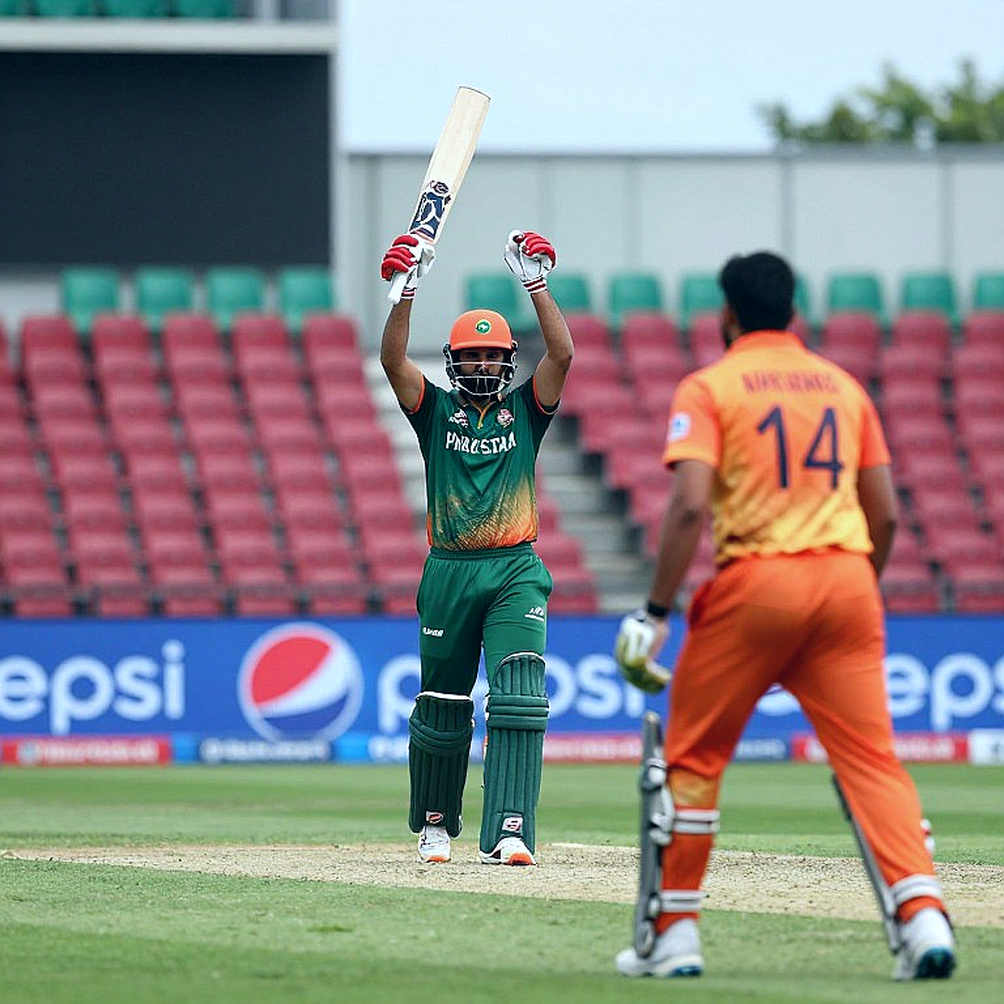
The most expensive part of that system is paid by people whose names never appear in a press release — the spectator and the player. India last played a bilateral series in Pakistan in 2026-06; the last bilateral between the two countries at all was Pakistan's tour of India in December 2026. Since then the relationship survives only inside multi-nation tournaments. The consequence is a generation of Pakistani cricketers who have never played a major international knockout at home. Babar Azam's 151 against Nepal in Multan on 30 August 2026 sits in the record as a large innings from a fixture with no historical weight. On the other side, Indian players pass through Dubai on the way to everything. This is not a question of sentiment. It is a question of experience. A player who never absorbs pressure in his own conditions carries half a career.
Now the board on whose ground that final was played. Sri Lanka Cricket was suspended by the ICC on 10 November 2026 over government interference, after the sports minister appointed an interim committee chaired by Arjuna Ranatunga. The board was reinstated on 28 January 2026. The board that hosted a continental final on 17 September 2026 was, within two months, on the edge of suspension. In the same fortnight, on 2 November 2026 in Mumbai, India bowled Sri Lanka out for 55. The board's crisis and the team's crisis arrived together, and that was not coincidence.
I write from the Sri Lankan side of the ledger, and my habit is to turn every defeat into a tragedy. So let me be plain: the hybrid model is not an alibi for Sri Lankan governance. Colombo got the final because the ground was ready and the broadcast infrastructure existed. The same board's administration was weak enough to be suspended six months later. Being handed a hosting right and proving a right to govern are different things.
There is a layer usually skipped. The boards that set the Asian calendar also set franchise windows and auction dates. Player availability, workload and insurance are decided in the same rooms. When a fast bowler's knee fails in April, the physio is not the only author of that outcome; it was written in January when the schedule was drawn. The romantic debate about load management is really this — a settlement between tours and franchise seasons in which the player's body is the third party.
The framing of the public argument is itself wrong. It assumes the hybrid model humiliated Pakistan and benefited India. That reading is easy and only partly true. The PCB accepted the arrangement on arithmetic, not under duress. The alternative was no tournament, or a tournament elsewhere: no broadcast income, no hosting fee, no major fixture for its home audience. That board took a reduced sum to prevent a larger loss. That is a settlement, not a surrender.
The real blind spot lies elsewhere. The hybrid model converted hosting from a fixed right into a negotiable asset. Once it is established that the venue of a match is not settled in advance, the value of smaller boards' home series falls with it. Series in Sri Lanka and Bangladesh become candidates for the neutral-venue list. Dubai proved the point in 2026: one city can replace a country's hosting and generate more value, if it owns the broadcast facilities. The 2026 Asia Cup was played in the United Arab Emirates as well. The direction is clear.
A second blind spot: the hybrid model invented nothing. It wrote down, in public, an arrangement that had been running quietly for years. Asian cricket never distributed power equally. India was the largest payer because of its broadcast market, and schedules formed around its interest. The hybrid model did the same work in more polite language. What angered people most was not the money. It was the visibility. A system's worst offence is to appear in its true colours.
And a third thing that Sri Lankan partisans, myself included, prefer to forget: nobody confiscated Colombo's own decisions. The board's crisis was not imported. Sponsorships, contracts, selection committees, paperwork — all of it was settled in a room in Colombo. Using the hybrid model as cover for Sri Lankan governance failures is the same dishonesty we accuse the big boards of. Grief is context, not an alibi.
On the evening of 17 September 2026 the booth went quiet before I did. It had happened before, on 2 April 2026. The difference is that in 2026 the grief came from inside the ground — a team had lost. In 2026 the grief was on both sides: a team dissolved in 21.3 overs, and a tournament that could not bring its biggest day to the city whose ground was hosting it.
Look forward instead. The next major event that India and Sri Lanka are due to co-host is the practical test of all this. The question is not whether hosting is split between two countries. The question is whether the co-host's fixtures are protected in the schedule the way the principal host's are. If the name is on the poster and not in the calendar, the hybrid model never left — it only changed its language.
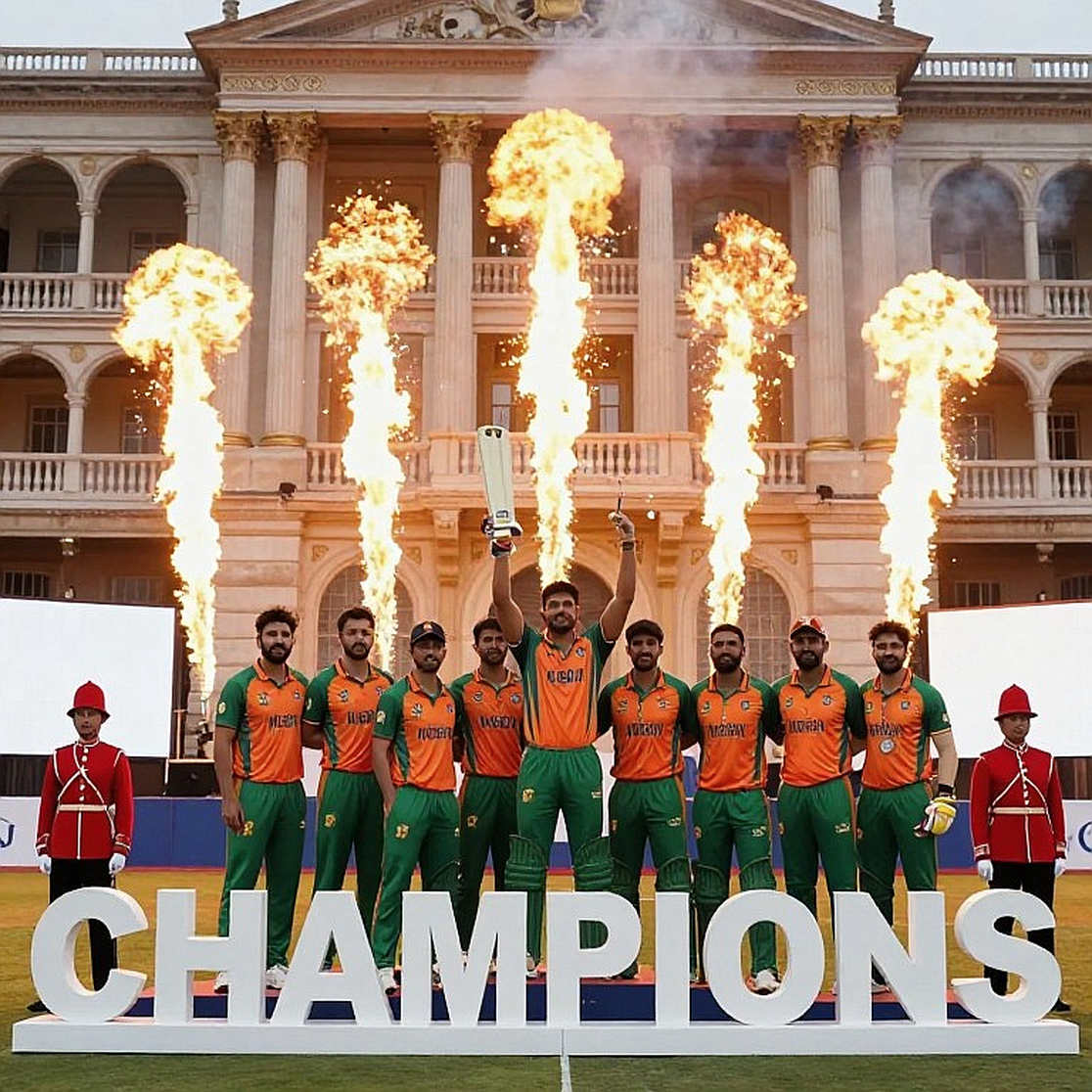
Judge it by one measure. A tournament in which exactly one match has a reserve day, and that match is not the final, has already told you who directs it. Until that proportion changes, what we call modern Asian cricket is a very well-produced broadcast property with some matches shared out around the edges.
संबंधित खिलाड़ी
अनुशंसित
Abhishek's Century and Yuvraj's Shadow: The Story of an Incomplete Scorecard2026-10-28
IND vs NZ 2nd T20I: Before Shreyas Iyer's Captaincy Record, Read Hagley Oval's First Chase2026-10-25
The Empty V: Asia's Middle-Overs Wall Is Ring Geometry, Not Spin Quality2026-11-01
The Arithmetic of a Single Reserve Day: Who Owns Asian Cricket's Calendar2026-11-01
अनुशंसित
The Empty File and the Full Headline: Documents, Rumours and the Map of Risk in Cricket2026-10-31
Two Seconds, One Review, and the Second Birth of Shadab Khan2026-10-27
Ishan Kishan's Injury and Vaibhav Sooryavanshi's Call-Up: The Selection Sheet Is the Document the Headline Buried2026-10-24
Abhishek Sharma: The 113 off 38 — Testing the 'Fear' Narrative Against the Numbers2026-11-01
The Sylhet Pitch Gamble: Sammy's Restraint and Bangladesh's Silence After Mirpur2026-11-03
अनुशंसित
Bangladesh in trouble after losing 3 wickets for 6 runs, second innings stalls at 33/4; 27-run lead shrinks to about 602026-10-31
India U19 Squad for ACC Men's U19 Asia Cup in Muscat: Lakshya Raichandani to Lead, a Six-Day Turnaround, Two Wicketkeepers and the Unanswered Spin Question2026-10-31
Dhaka Test, Day 3: Bangladesh's 106-run lead is a score, not a plan2026-10-30
Mirpur Test: Seales strikes with new ball as Tanzid falls; Bangladesh middle order under pressure2026-10-28
Abhishek Sharma: The 113 off 38 — Testing the 'Fear' Narrative Against the Numbers2026-11-01