
Pakistan vs Sri Lanka: The Real Question Buried in a 110-Run Scorecard
**मुख्य उत्तर:** श्रीलंका ने लाहौर में पाकिस्तान को आठ विकेट से हराकर ट्राई-सीरीज़ फ़ाइनल में जगह बनाई; इंग्लैंड तीन मैचों में शून्य अंक के साथ बाहर हो गया। **मुख्य तथ्य:** - पाकिस्तान 110 रन पर ऑल आउट; बाबर आज़म का 29 रन टीम का सर्वोच्च स्कोर रहा। - दिलशान मदुशंका ने पाँच विकेट लिए; शायन आचार्य को दो विकेट दर्ज, पुष्टि लंबित। - कामिंदु मेंडिस 62 रन नाबाद; श्रीलंका ने 50 रन की शुरुआती साझेदारी से पीछा शुरू किया। - अंक तालिका: श्रीलंका 6 अंक/3 मैच, पाकिस्तान 6 अंक/4 मैच, इंग्लैंड 0 अंक/3 मैच। - फ़ाइनल पाकिस्तान बनाम श्रीलंका, लाहौर में; मैच तिथि स्रोत में अघोषित। **स्रोत:** स्टेज-1 मैच रिपोर्ट; प्रकाशन तिथि अघोषित। बॉल्स फ़ेस्ड, ओवर, इकॉनमी, नेट रन रेट और टॉस का विवरण उपलब्ध नहीं; स्वतंत्र स्कोरकार्ड से पुष्टि लंबित। **संबंधित प्रश्नोत्तर:** प्रश्न: पाकिस्तान हारकर भी तालिका में शीर्ष पर कैसे है? उत्तर: यह नेट रन रेट से ही संभव है, पर रिपोर्ट में न अंक प्रणाली दी गई है न एनआरआर, इसलिए यह क्रम स्वतंत्र रूप से सत्यापित नहीं किया जा सकता। प्रश्न: इंग्लैंड का बाहर होना किस गणित से तय हुआ? उत्तर: तीन मैचों में शून्य अंक के साथ इंग्लैंड श्रीलंका के छह अंक तक नहीं पहुँच सकता, इसलिए बाहर होना किसी भी अंक प्रणाली में सही है। प्रश्न: क्या मदुशंका के पाँच विकेट उनके स्तर का प्रमाण हैं? उत्तर: नहीं, क्योंकि ओवर, रन और इकॉनमी के बिना यह तय नहीं होता कि विकेट नई गेंद की स्विंग से आए या दबाव में फँसे बल्लेबाज़ों से।
Lahore. Gaddafi Stadium. An innings in which four batters reached double figures — 29, 17, 15, 10 — and everything else dissolved into roughly thirty-nine runs. Pakistan all out for 110. Then Sri Lanka knocked off 111 with eight wickets in hand, and the tri-series final was fixed as Pakistan versus Sri Lanka. England out, zero points from three.
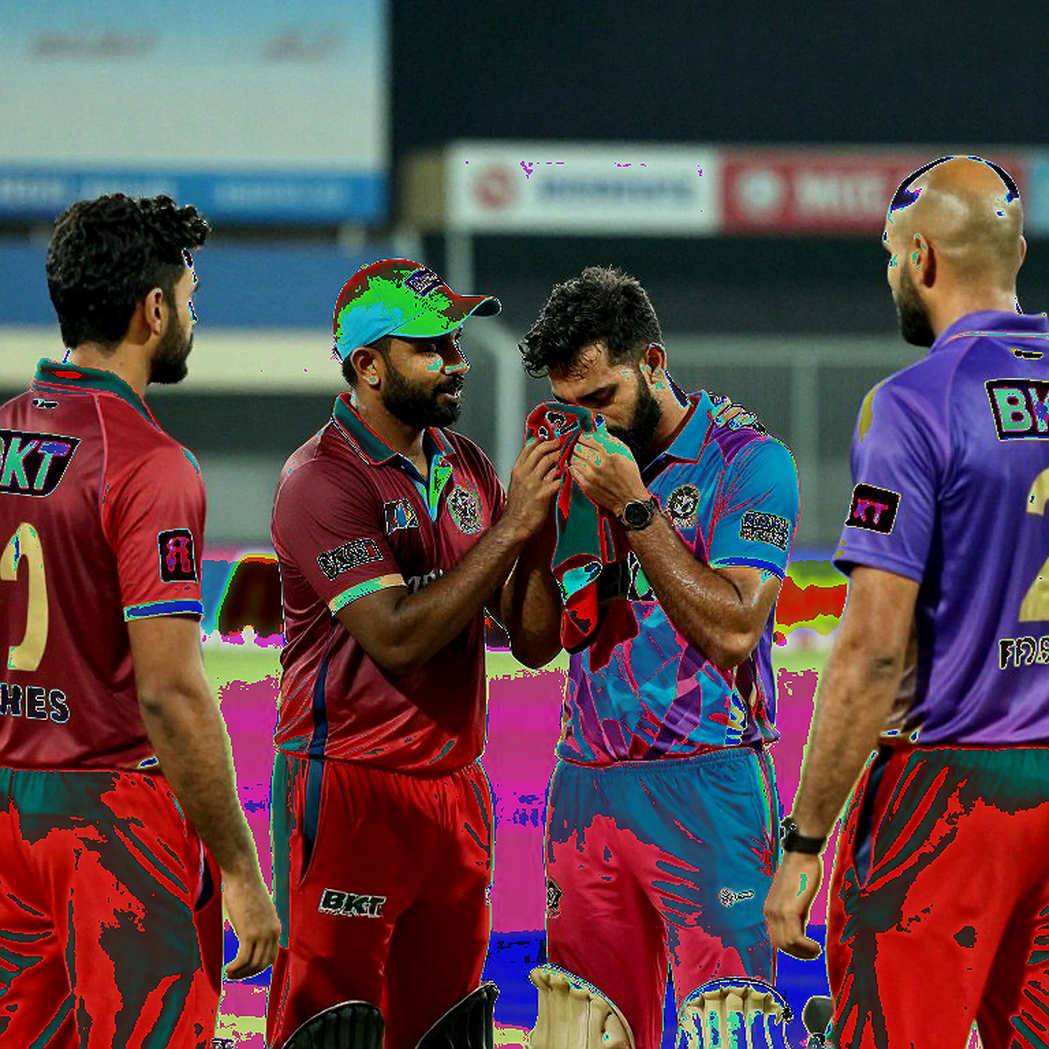
One name glares off the scorecard: Dilshan Madushanka, five wickets. Another name glows more quietly: Kamindu Mendis, 62 not out. Between them sits the least discussed object in cricket — Shaheen Shah Afridi's fifteen runs before he was dismissed.
A fast bowler's fifteen does not register as news. It is the single most important line in this match for me. Shaheen bats when the top order has already gone inside the first ten or twelve overs. His bat moving is evidence that Pakistan's innings was not a lower-order cave-in but a top-order fracture. And it happened on the ground where the final will be played.
I have learned to trust the pause before the call, not just the call. In the commentary box, the half-second before "out" carries the actual information. In this match the pause is stuck at 110. The table shows Pakistan on top, and underneath that same table sits the side that has just beaten them by eight wickets. Both statements are true. Together they open a question the match report never answers.
This piece opens that question, and records what is missing from the scorecard while doing it.
Context: three teams, four matches, an incomplete table
This is an international tri-series — Pakistan, Sri Lanka, England — staged in Lahore. Pakistan have played four league matches, which in a three-team structure means each side meets the others twice. Sri Lanka have six points from three. Pakistan have six from four. England have none from three.
The format is nowhere stated in the source material. References to innings measured in seventeen balls and six balls, a four-match league stage and a 111 target all point to a twenty-over game. I am logging that as inference, not conclusion. The distinction matters, because every strike-rate argument below rests on it. If this turns out to be a fifty-over match, my entire reading of Avishka Fernando's sixteen off seventeen collapses.
The auction taught me that a gut feeling can lose a bidding war and still be right. In 2026 I declared Ben Stokes a failure in Indian conditions and he finished Player of the Tournament. I spent three weeks re-watching every Stokes innings and learned that intuition has to be sat down next to evidence and cross-examined. That is why, when I call a number big, I now also state how well it is supported.
The information set for this match contains no balls faced. No overs bowled. No economy rate. No net run rate. No toss result. No weather, dew or Duckworth-Lewis-Stern reference. Not one fact carries a source. And one name cannot be verified against a senior Sri Lankan squad. This article is written with those gaps open, not smoothed over.
Madushanka's five-for: the most valuable number, the emptiest analysis
Five wickets in a T20 innings is a rare event. Across a full league season you can count them on one hand. So Madushanka's haul is the heaviest, most concrete piece of information in the match.
It is also close to useless for projection.
We do not know how many overs he bowled, how many runs he conceded, or in which phase the wickets came. "Five for eighteen defending 110" and "five for thirty-two at the death" are both recorded as five wickets and mean opposite things. The first is a trap sprung on batters already under scoreboard pressure. The second is a bowler manufacturing pressure himself.
Five wickets from a left-arm seamer are usually built from two ingredients: the angle and swing with the new ball, and yorker accuracy at the death. If Madushanka did both in one spell, that is a different order of find. If he took three with the new ball and two from batters rushing, the story is something else. The scorecard refuses to tell us which.
One detail in the source goes unremarked: Sri Lanka used at least five bowlers — Madushanka's five, Shayan Acharya's two, and one each for three others. Rotating five bowlers while defending 110 suggests an attack that does not depend on one or two names. That is more useful for the final than the five-for itself, because it says Sri Lanka have wicket-taking options rather than one strike bowler.
Pakistan's 110: a top-order fracture, not a lower-order collapse
The numbers are blunt. Babar Azam 29, the top score. Then 17, 15, 10. Four batters past double figures. The remaining seven plus extras sharing roughly thirty-nine.
A captain's 29 being the highest score in a 110 all out is not a personal form question. It is a system question.
When one batter holds while four around him fail to reach twenty, the problem lives in the shape of the top order. Wickets fell early, the new ball was exploited, and the lower order was exposed inside the first phase. Shaheen making fifteen is the tell.
I need to be careful here, because this is where cricket writing slips fastest. To stamp Babar's 29 as slow we need his balls faced. They are not given. Twenty-nine off fifty and twenty-nine off twenty-five look identical on a scorecard and mean opposite things. Babar's T20 strike rate is being argued over on both the Indian and Pakistani desks right now, and the very report of the match that would settle it omits the number that settles it.
The most important fact is not that Pakistan lost. Losing is a match. The important fact is that Pakistan were bowled out for 110 at home, in front of their own crowd, on the ground where the final will be played. A one-off home collapse can be a bad night. When only one batter passes twenty in that collapse, it is structure, not weather.
This is the profile I call qualified but fragile. Top of the table, into the final, and one load-bearing point in the batting. For such a side the final is not a bowling examination. It is a top-order repair job.
Sri Lanka's 111: the win is real, the batting evidence is not
Eight wickets. Three wins from three. A fifty-run opening stand. Kamindu Mendis 62 not out. From outside it looks like a side in rhythm.
From inside it looks like a batting line-up whose real examination has not yet happened.
Chasing 111 proves nothing about a competent T20 batting side. Once the fifty stand was posted, the required rate never became a constraint. A half-century in that chase can demonstrate skill; it cannot demonstrate performance under pressure. That is why I call Kamindu's 62 not out low-leverage evidence. It is a signal of touch, not proof of capacity.
His role raises a separate question. He is listed here as an opener batting through, while at senior level he is generally a middle-order player. That mismatch is small on the page and large in meaning: it points to an experimental selection, or to a series that is not fully senior. I will come back to this.
Avishka Fernando's innings is the most interesting object in this section. Sixteen off seventeen, a strike rate near ninety-four. For a T20 powerplay opener that is slow. Chasing 111 it is harmless. Chasing 180 it is a structural problem. Note what I am not saying: I am not calling him out of form. I am saying the gap between his role and the team's need is a question, and the final may open it. Note also that the 16/17 is my own arithmetic — the source does not list balls faced separately.
Then the small crack nobody noticed. The source says Sri Lanka "did not lose another wicket" after the opening stand. Elsewhere it records Kusal Mendis dismissed for eight off six. Both cannot be true. The totals reconcile — sixteen, eight, sixty-two, twenty-three and about two extras make 111 — so the arithmetic holds and the sequence does not.
That small inconsistency is the loudest warning in the file. If a report cannot keep the order of wickets straight, how much confidence can its technical conclusions carry?
There is a second tangle. Two Mendises appear — Kusal and Kamindu. Different players, different roles. The source presents them almost as one opening pair. That is an entity-resolution failure, and in my experience those never arrive alone.
The table: an unexplained anomaly at the top
Sri Lanka: three matches, six points, unbeaten, second. Pakistan: four matches, six points, top, and beaten in this match.
An unbeaten side sits below the side it has just beaten by eight wickets.
The arithmetic is not wrong. It demands a net run rate explanation, and the report supplies none. Six points from three matches is consistent with two wins at three points each or three wins at two points each. The points system is unstated, so the table cannot be independently verified.
This is a reader-trust problem for the organiser. When a side is unbeaten and second, the first question a viewer asks is how. If the answer is net run rate, print the number. If the answer is something else, print that. What goes unprinted breeds doubt.
One explanation I will hold as speculation only: Pakistan may have banked a large net run rate from earlier wins by wide margins. That reading collides with this match, where they were bowled out for 110 at home. Put the two together and the picture is uncomfortable — a team that can post 200 and can also fold for 110.
England's exit: the result is a fact, the crisis is an import
Three matches, zero points, eliminated. The arithmetic is clean: you cannot reach six from zero under any points system. That conclusion is solid.
Everything beyond it is soft.
Which match, against whom, at what score, with which squad — none of it is available. Writing "England's white-ball reset has failed" from this is not analysis, it is imported narrative. That story has been running in the British press since 2026 and attaches itself to every defeat. My job is to hold it back until evidence arrives.
There is also a structural point nobody makes. England's last fixture is now a dead rubber. Pakistan are already qualified. A match with nothing at stake for either side changes selection, experimentation and intensity. If its result moves the table, the quality of that movement is suspect.
The contrarian angle: the table is the story, not the cricket
Here I have to argue with myself.
Above I called Madushanka's five-for the biggest piece of information. I stand by it. But read this report as a reader, and the strangest thing is not the cricket. It is that a side just beaten by eight wickets sits above the side that beat it, and nobody asked why. That anomaly should have been the first paragraph. It does not exist.
So my contrarian conclusion is this: the biggest news in this match is not that Sri Lanka won, but that Pakistan lost and stayed top, and no one asked how.
Second contradiction: I called Pakistan fragile. Am I repeating the auction mistake — reading a team's character off a single innings? I checked myself. I am not calling Pakistan weak. I am saying their batting has one reliable line, and that line will be examined on the same ground in the final. That is a structural reading, not a capacity claim. A capacity claim invites refutation; an observation invites verification.
Third contradiction, and the sharpest: the most over-read fact here will be Kamindu's 62 not out, presented as a breakout. It was an unbeaten innings in a 111 chase where the required rate never rose above par — the lowest-leverage kind of fifty. Meanwhile the genuinely narratable event, Madushanka's five-for, is the one that most needs verification, because we have neither overs, nor economy, nor the order in which the wickets fell.
This is where the Super Over comes back. A Super Over produces a result that settles nothing about the teams; it settles a winner. This match is the same shape. It fixed the final's pairing. It did not tell us what Pakistan's batting is, or how ready Sri Lanka's is. What we extracted from the gap between 110 and 111 is the outcome of one tri-series fixture, not a verdict on the cricket.
What is missing is also the story
I have watched cricket for twenty-two years, from commentary box to desk, and I keep one rule: write what does not appear. This report does not show how many overs Madushanka bowled. It does not show who won the toss. It does not show whether there was dew in Lahore that night — and dew in a Lahore night match is a major variable that makes the second innings easier. If dew was there, this comfortable chase was dew's favour, not the batters' achievement.
It does not show whether there was a DRS controversy. That absence is notable, because a T20 innings bowled out for 110 usually generates an argument about the pitch or the umpiring. No argument here is not proof of a clean match; it is a reporting gap.
My own view is that long VAR-style reviews dismember a match's rhythm, and two minutes of waiting is enough to cool any celebration. Here the problem is inverted: no review is recorded at all, so nothing can be said about rhythm either way.
And the largest item of all — the roster. Babar Azam and Shaheen Shah Afridi appear alongside Arafat Minhas and Hasan Nawaz, both young Pakistan names, while Sri Lanka's columns credit "Shayan Acharya" with two wickets, a name that does not verify against a senior Sri Lankan squad.
That is the biggest unresolved question in the file: is this a senior international tri-series, or a development or A-team event presented as one?
If it is the second, half the conclusions here void themselves, because the question stops being form and becomes audition.
What comes next: the final, same ground, same opponent
The final is Pakistan versus Sri Lanka in Lahore. The date is not in the source.
For Pakistan this is not a bowling examination. Their attack could not defend 110, and nobody can defend 110; that innings should not be charged to the bowlers. The real examination is the top order. If the same shape persists around Babar, 110 can return in the final. If the top three change, Pakistan become favourites — home ground, home crowd, and an opponent whose batting has not yet been tested.
For Sri Lanka it inverts. Three wins, an unbeaten run, and a batting line-up that has not yet chased anything above 111. If the final asks them to chase 170 and Avishka's seventeen-ball rhythm returns, Madushanka's five-for will go to waste. The final is the first genuine paper on Sri Lanka's batters, not their bowlers.
Two things I will watch before the final, neither in this report: the toss, and the dew. Heavy dew in a Lahore night makes batting first a risk and chasing a reward. If Pakistan win the toss and bat, as home sides usually do, and the dew arrives, their top order will be under double pressure.
And one promise to myself. If Madushanka takes four or five again in the final, I will not call him the next big thing — not until his economy and full spell detail are published. The auction taught me that a gut feeling can lose a bidding war and still be right. It also taught me that being right early and being right are two different things.
In Moscow I mispronounced Mbappé and heard the distance between knowing and belonging. There is a name in this match I cannot pronounce properly either — "Shayan Acharya" — because I do not know who he is. When you cannot say a person's name right, you cannot say much that is right about their cricket. This article is written inside that limit.
The most useful thing before the final is not deciding who wins. It is finding a trustworthy scorecard — balls, overs, economy, net run rate, toss. When those arrive, we can argue about what Pakistan's 110 really was. Until then, this 110 is a photograph with a correct frame and a fogged lens.
One image from this match is permanently filed with me. A fast bowler in Lahore's floodlights, walking back for fifteen, and the number on the board that had already been decided before he arrived. That image can repeat in the final. Or Pakistan have one last chance to change it.