
होमWorld CricketFakhar Zaman's 127 and Saad Baig's Maiden Fifty Seal Tri-Series for Pakistan in Lahore
World Cricket
Fakhar Zaman's 127 and Saad Baig's Maiden Fifty Seal Tri-Series for Pakistan in Lahore
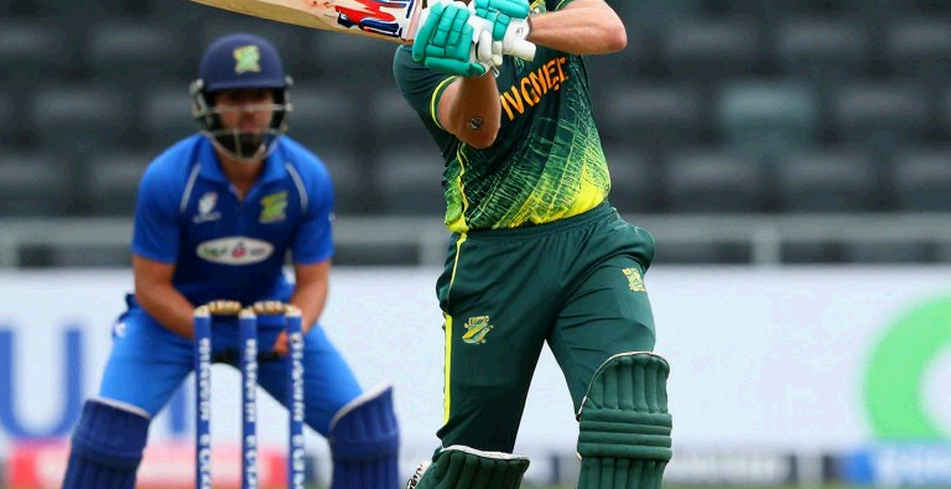
पाकिस्तान ने लाहौर में त्रिकोणीय वनडे सीरीज़ का ख़िताब जीता। फखर ज़मान ने 99 गेंदों पर 127 रन बनाए (स्ट्राइक रेट 128.3), जो उनका 12वाँ वनडे शतक था, और उसमें 11 चौके व 6 छक्के शामिल रहे। साद बेग ने 75 गेंदों पर 74 रन की पारी खेली, जो उनका पहला वनडे अर्धशतक था। पाकिस्तान ने 5 और 0 रन पर दो शुरुआती विकेट गँवाए थे, इसलिए यह जीत बल्लेबाज़ी के सामूहिक प्रदर्शन से अधिक एक बचाव-पारी का नतीजा थी। रिपोर्ट 36.5 ओवर पर 230/5 पर रुकती है; लक्ष्य, जीत का अंतर, टॉस और गेंदबाज़ी के आँकड़े उपलब्ध नहीं हैं, इसलिए चेज़ की प्रकृति के बारे में कोई निष्कर्ष अधूरा है।
Pakistan have clinched the tri-series ODI trophy on home soil in Lahore, and the result rests overwhelmingly on one innings. Fakhar Zaman struck 127 off 99 balls, his 12th ODI hundred, while Saad Baig made 74 off 75 — a maiden ODI half-century — to carry a rebuilding effort after the hosts slipped to two early wickets for 5 and 0.
The report as it stands stops at 230/5 after 36.5 overs, with both set batters dismissed. In a 50-over format that leaves 13.1 overs unaccounted for. The target, the victory margin, the balls remaining and whether the lower order was exposed are all absent. Any claim that this was a dominant chase therefore rests on the headline rather than on the scoreline. That distinction between outcome and process matters more than any adjective in the report.
Sri Lanka's side of the story is missing entirely. No bowling figures, no bowler names, no account of their innings. That says nothing about whether they were strong or weak; it says only that the available information cannot support a conclusion either way.
Fakhar's innings had a clear shape. Of his 127 runs, 80 came in boundaries — 11 fours and six sixes — which is roughly 63 per cent of his output. Seventeen of his 99 deliveries were hit to the rope, which indicates that the aggression was present from the start rather than being a late-overs surge.
His strike rate was 128.3. Modern ODI top-order par sits at roughly 90 to 100; anything above 120 belongs in the elite-aggressive bracket. The notable part is that this tempo came while wickets were falling at the other end and the team needed consolidation. Two inferences follow: the surface and outfield were likely scoring-friendly, and the target was probably around or above 300. Both are inferences, not reported fact.
The profile is boundary-or-dot rather than rotation-heavy. With 80 runs coming in boundaries, his remaining 82 balls produced roughly 47 runs, about 0.57 per ball on non-boundary deliveries. That approach is highly valuable in a chase with a high required rate, but it is streak-dependent. On a slower surface, or against bowlers who take pace off, the same method produces a lower floor.
The century is a longevity signal rather than a peak signal. A 12th ODI hundred places him among the small group of Pakistani batters with sustained multi-year output in the format. It does not establish that he is at his career apex.
Structurally, Saad Baig's 74 off 75 is the more informative innings. A maiden ODI fifty at roughly a run a ball, struck inside a rebuild, indicates temperament and format-appropriate tempo — the classic second-fiddle template that holds an end without wasting deliveries.
But one innings establishes no ceiling. Home conditions, unknown bowling quality and unknown match circumstances make this a promising data point rather than a trend. Without an away sample and a sample against quality spin, conclusions about his upper level would be premature.
Beneath those two innings sits an uncomfortable fact. Maaz Sadaqat made 5 and Babar Azam made 0, meaning two of the top three contributed five runs between them. That is not the picture of a settled batting unit; it is the picture of a rescue operation.
Babar's duck should not be treated as a form verdict. A single zero carries no more diagnostic weight than a single good innings — the sample is too small for either. It belongs in the warning column, not the conclusion column.
The report also asserts that Pakistan's batting delivered on all fronts. That claim collides with the same report's own numbers, in which the top three made five runs between them. The media habit of letting the result outrun the process should not be carried into any assessment of this side.
The headline-body gap is worth flagging separately. The headline asserts that the series was clinched, while the body stops at 230/5 after 36.5 overs with both set batters out. That is characteristic of a live-report page re-headlined after the result, or of an extraction that captured a mid-innings snapshot. Either way, a reader relying on the body cannot reconstruct how the chase finished.
The team picture is two-track. An experienced campaigner produced a hundred at a 128 strike rate while less-established players received genuine ODI time. That is the signature of a side in transition — provided the younger players are being given defined roles rather than being used as injury cover. The report does not distinguish between the two.
Playing in Lahore in front of a home crowd is a contextual advantage in itself. No away split for any player appears in the source material, so the magnitude of home benefit can be neither measured nor dismissed. The prudent approach is to read every number from this match through the lens of home conditions and never merge it with away data. It is also worth noting that the match's status within the series — final or league fixture — is not stated, so whether this was a first-choice XI is itself uncertain.
For the cricket industry, the most concrete signal here is hosting capacity rather than player economics. Staging and winning a multi-nation ODI series on Pakistani soil is the asset that unlocks broadcast inventory, ticketing and sponsorship. Importing franchise-league logic into an international tri-series title is a common analytical error; the two markets do not share a valuation mechanism.
On rules and governance the report is clean. There is no DRS controversy, no DLS-revised target, no over-rate sanction and no code-of-conduct charge. A clean data baseline is itself information.
The risk map is topped by a sporting risk: top-order dependency on a single senior batter. Second is small-sample over-promotion, specifically converting Saad Baig's 74 into a permanent role. Third is home-condition inflation of performance data. Fourth is age-curve exposure across the senior core, for which no data exists in this source. Fifth is the misleading impression of an all-round performance created by the headline-body gap. The overall risk rating sits at medium, almost entirely on the sporting dimension.
The public narrative splits in two. On Fakhar, the story is directionally fair: a 12th hundred at 128.3 is a verified fact. On the batting unit, the story is overstated. The emerging-star thread around Saad Baig still awaits an away sample and a bowling-quality sample. Neither a hype climax nor a backlash cycle is yet visible.
In transmission terms, the most meaningful effect is upstream: exposure. Handing two less-established players a home ODI series is how a national pipeline accumulates international sample data, and that benefit outlasts the trophy. Downstream broadcast or investment valuations do not move on a single series result; they move on sustained home hosting.
The signals worth tracking are specific. If Pakistan's top three aggregate under roughly 60 per cent of team runs across the next five ODIs, that confirms structural fragility rather than a one-off. If Saad Baig's away strike rate drops below about 75, he should be reclassified as a home-condition beneficiary. If Fakhar's boundary share falls below about 45 per cent on slower pitches with no rotation uplift, that signals a decline phase or surface dependency.
Two definitions are worth restating. Strike rate means runs per 100 balls; 128.3 here means 127 runs from 99 balls. Boundary share means the percentage of runs coming in fours and sixes, a rough proxy for risk profile. Required run rate is the metric that actually settles a chase, and it is the one most conspicuously absent here.
Explicitly carried forward as missing: target, victory margin, balls remaining, toss, weather, pitch report, Pakistan's bowling figures, Sri Lanka's innings, the match date and the match's status within the series. Career splits, exact ages and cap numbers for Fakhar Zaman and Saad Baig remain pending verification. This analysis is based on public information and the source text, is offered for sports-information reference only, and does not constitute betting advice or prediction. Several conclusions above are constrained by incomplete information and should be re-tested once the full scorecard is available.
संबंधित खिलाड़ी
अनुशंसित
Wisden's New Quiz: Six Wickets for Under 20 Runs — Only 24 Times Since 20262026-11-02
Three Headlines, Zero Numbers: The Lancashire Refusal, England's Two ODI Defeats and Bavuma's Case in the Ledger2026-10-27
Eight Tabs, Zero Rows: The Cricket Report Where Every Cell Read N/A2026-10-31
Cricket: How a Single Sport Reshaped the Subcontinent's Social and Cultural Map2026-11-01
Empty Data Sheet, Filled Template: Where Cricket Analysis Really Fails2026-10-26
अनुशंसित
The Empty Record: When a Cricket Report Came Back With No Facts2026-10-28
The Scorecard of Silence: Why N/A Is the Most Honest Answer in Cricket Analysis2026-10-24
McCullum praises learning curve and Brook's captaincy after Sri Lanka win2026-10-31
Harvey and McSweeney Leave South Australia 240 to Win With Nine Wickets: The Follow-On Decision That Built the Chase2026-10-30
Empty Data, Confident Claims: The Integrity Crisis in Cricket Analytics2026-11-01
अनुशंसित
Afghanistan vs Zimbabwe: Three Evenings in Sharjah, and the One Name Missing From the Sheet2026-10-26
311* Off 93 Balls: Aaryan Sharma's Arithmetic Balances, the Match Context Doesn't2026-10-30
The Blank Column: The Indian Cricket Record Nobody Wrote Down2026-11-01
The Empty File and the Full Template: The Day the Cricket Desk Never Got the Story2026-10-23
Made Captain, Then Not Renewed: The Ledger of Lancashire and James Anderson's 25 Years2026-10-26