
Tennis
Tennis's Second Court: The Data Battle Being Fought Beyond the Scoreline
यह रिपोर्ट टेनिस में डेटा-आधारित विश्लेषण के बढ़ते महत्व पर केंद्रित है। इसमें बताया गया है कि सर्विस-रिटर्न आंकड़े, बावन हफ्तों का रोलिंग रैंकिंग सिस्टम, पॉइंट्स डिफेंस, सतह विशेषज्ञता, वर्कलोड और चोट प्रबंधन, टीम ढांचा तथा मीडिया नैरेटिव मिलकर किसी खिलाड़ी के प्रदर्शन की असली तस्वीर बनाते हैं। मुख्य संदेश: बिना ठोस खिलाड़ी, टूर्नामेंट और आंकड़ों के किसी निष्कर्ष पर नहीं पहुंचा जाना चाहिए।
In modern tennis, the scoreline is only one part of the story. When a player walks onto the court, they do not carry just a racquet and a pair of shoes; they carry fifty-two weeks of data, the geometry of their serve, the depth of their return, and an accounting of the body's fatigue. From tournament directors to coaches, everyone is chasing the same question: does the strength that shows up on paper hold up on court? That question has become the centre of gravity of contemporary tennis journalism and analysis.
Once, a match story revolved around winners and unforced errors. Now, Hawk-Eye and ball-tracking technology map almost every shot. We learn how often a player's first serve lands from a given angle, how much their success rate differs between the deuce court and the ad court, and which shot they reach for under pressure. These numbers stop being numbers and become the blueprint of strategy for the opposing team.
First-serve percentage and points won on serve are not the same thing. A player can land sixty-five per cent of first serves, but if the pace and placement are predictable, a good returner will cut through it. That is why modern analysis leans on measures such as service placement diversity and return position. A single statistic can tell two different stories — and that is the central difficulty of the data era.
The ranking system is the spine of this entire structure. Tennis rankings run on a rolling fifty-two-week basis, which means points won in this same week a year ago drop off automatically. The direct implication is that a player sitting at number one is not necessarily the player in the best form right now. A large share of their total may come from one outstanding tournament last season, and that share may be about to vanish in the coming months.
This is why 'points defence' has become the most sensitive phrase in tennis analysis. When a large block of points expires at once, a player faces what is commonly called a points cliff. If they cannot reproduce that level of performance in the same window, a ranking slide is all but certain. Looking at the ranking alone is therefore not enough; it matters how that ranking was built — through sustained performance, or through a handful of extraordinary weeks.
The question of surface follows the same arithmetic. Hard court, clay and grass demand different things. Clay rewards long rallies, patience and sliding footwork; hard courts reward pace and serve dominance; grass rewards a low bounce and short points. A player who performs at a similar level across all surfaces faces the hardest part of the tour, because the rhythm of the season keeps changing and the window to adapt between surfaces is very short.
The shape of the calendar also defines any player's season. The year opens with the Australian swing, moves into the European clay season, then the short but decisive grass stretch, then the North American hard-court series, and finally the Asian and indoor swing. The time available to move from one surface to another is often just one or two weeks. Every team therefore has to decide where to spend its full strength and where to rest.
That decision is tied to workload management. In modern tennis, injury is rarely an isolated event; it is usually the result of fatigue accumulating over time. Wrist, elbow, knee, back and shoulder are consistently the five most cited trouble spots. A physio called to court mid-match, the pattern of taping, a sudden drop in serve speed — these are the signals analysts watch closely. A team that reads them early can protect a player before a major tournament.
The structure of a team has changed too. Once it was a head coach and a physio; now a top player may travel with a head coach, a specialist serving coach, a fitness trainer, a physio, a data analyst and an agent. Even a coaching change is no longer purely emotional — it is calculated with the short 'honeymoon' window in mind, because the early gains made under a new coach often plateau within a few months.
There is another side to this: narrative. When a player wins one or two big matches, media and social platforms start building headlines about a 'new king' or 'the face of the next generation'. But the temperature of a narrative and the actual level of performance are not always the same. A story built on a small sample often begins to crack within months. Cautious analysts therefore ask first how many matches that surge rests on, and what the standard of the opposition was.
Then there is home-media bias. Any country's press watches its own player with a little extra enthusiasm. That is not inherently wrong, but if analysis rests only on that story, the conclusions can mislead. Data and narrative have to be held apart and examined separately — and where the two diverge is usually where the most interesting story sits.
Tennis is not just a game played on court; it is an entire industry. Prize money, the Grand Slam business, agencies and endorsements, tournament investment, equipment technology and broadcast rights are all interlinked. When a major tournament raises its prize purse, the effect reaches a player's schedule; when a new investor enters the tour, calendar priorities begin to shift. Grassroots coaching markets and youth participation take their direction from the same signals.
In the Indian and Asian context, this becomes especially important. When an Asian player finds success on a big stage, the impact is not limited to a ranking position — courts get built, academy enrolments rise and sponsor attention shifts. But that impact is durable only if the success is repeated, because a structure built on one or two big results tends to collapse quickly.
One thing is clear through all of this. Reaching any conclusion in tennis requires three things: a named player and their profile, a tournament and its tier, and hard data. Remove any one of the three and everything else becomes guesswork. That is the hardest discipline in journalism — there is pressure to say something, but the correct approach is to state plainly that information is insufficient where facts are absent.
What to watch in the months ahead is straightforward. First, which players can reproduce their best across a surface transition. Second, whose points are about to expire and when that will show in the rankings. Third, which teams have taken workload management seriously and which have not. And fourth, whether the media narratives match the data or have run past it.
This second court of tennis is not directly visible to spectators. The camera follows the ball, but the preparation behind that ball — the data, the planning, the fatigue accounting and the balance of confidence — is what decides who lifts the trophy. So the next time you watch a match, do not look only at the score; consider how much calculation sits behind it.
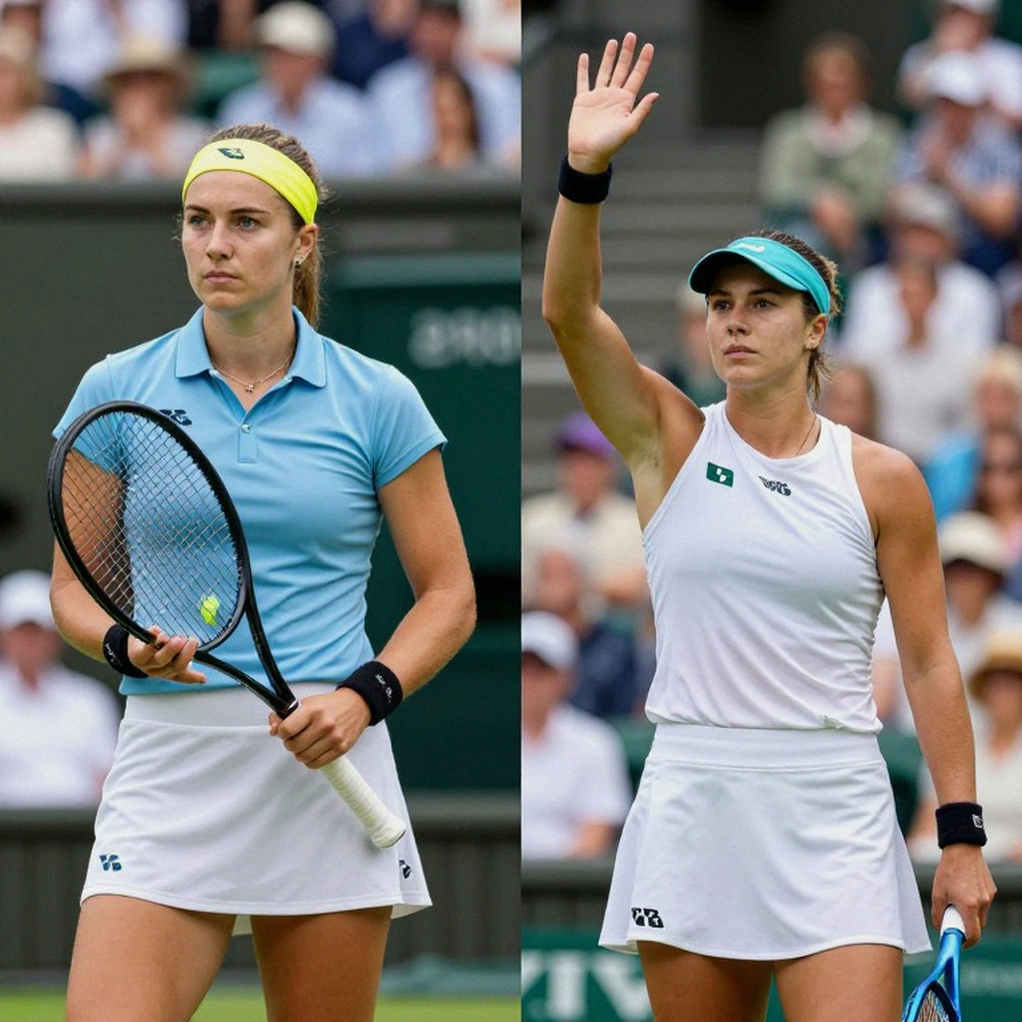
संबंधित खिलाड़ी
अनुशंसित
The Mathematics of Points Defence: How the Tennis Ranking System Shapes a Player's Calendar2026-10-31
Stopped Before the No. 1 Coronation: De Minaur Upsets Zverev in Vienna Semifinal Decided by a Tiebreak, Zverev Wins 16 Games and Still Loses2026-11-01
The Toss That Stalled at 5-2: Boulter's British No. 1, and the Return That Saved Her2026-10-24
A Pakistani Fiscal Surplus Filed Under Tennis: Twenty-Two Information Points, Zero Tennis Entities2026-10-23
Ningbo: Rybakina beats Kawa 6-1, 3-6, 6-1, but the second set raises the old question2026-10-24
अनुशंसित
Autopsy of a Record: Indian Tennis's Data Died Along With the Chennai Open2026-10-24
Twelve Double Faults and a House Narrative: Coco Gauff's Serve Is Not Yet a Weapon2026-10-31
The Empty Scorecard: Who Is Keeping Indian Tennis's Record?2026-10-23
39-15, No. 9 and an Empty October: The Ledger of Iga Swiatek's Season Shutdown2026-10-24
Iga Swiatek: The 42-16 Ledger, an Open Question at the Thigh, and the One Title That Covered a Season2026-10-23
अनुशंसित
Lyon's Score Is Right, the Calendar Is Not: Auditing a Wire Report That Put Three Tournaments on One Saturday2026-10-30
Rybakina's Ningbo Title: A 38-Minute First Set, 500 Points Recovered, and the Business Lesson of an Empty Calendar2026-10-26
Autopsy of a Record: Indian Tennis's Data Died Along With the Chennai Open2026-10-24
The Toss That Stalled at 5-2: Boulter's British No. 1, and the Return That Saved Her2026-10-24
Austin's Three-Session Friday and the 102-Point Gap Nobody Is Reading2026-10-24