
Peres Jepchirchir Provisionally Suspended: The Sample Filed Before Sydney, and a Result That May Have to Be Rewritten
**मुख्य उत्तर:** परेस जेपचिरचिर को एथलेटिक्स इंटीग्रिटी यूनिट ने 30 अगस्त 2026 की सिडनी मैराथन से पहले केन्या में लिए गए प्रतिस्पर्धा-बाहर नमूने में EPO पॉज़िटिव पाए जाने के बाद अनंतिम रूप से निलंबित किया। यह दोषसिद्धि नहीं, प्रक्रिया है। **मुख्य तथ्य:** - 33 वर्षीय जेपचिरचिर ने सिडनी मैराथन 2 घंटे 18 मिनट 31 सेकंड में जीती, तीन मिनट से अधिक के अंतर से। - विवादित नमूना दौड़ से पहले केन्या में लिया गया था; सिडनी का नतीजा उसके बाद का है। - EPO गुर्दों में बनने वाला प्राकृतिक पदार्थ है; इंजेक्ट किए जाने पर यह केवल कुछ दिन तक सीधे पकड़ में आता है। - जेपचिरचिर 2020 टोक्यो ओलंपिक और सितंबर 2025 विश्व चैंपियनशिप की मैराथन स्वर्ण पदक विजेता हैं। - सिडनी 2025 से एबट वर्ल्ड मैराथन मेजर्स की सातवीं दौड़ है; उन्होंने सात में से पाँच मेजर जीती हैं। **स्रोत:** मूल अंतरराष्ट्रीय खेल समाचार रिपोर्ट, सिडनी मैराथन (30 अगस्त 2026) के तुरंत बाद प्रकाशित। **संबंधित प्रश्न-उत्तर:** Q: क्या जेपचिरचिर पर प्रतिबंध लग चुका है? A: नहीं, यह अनंतिम निलंबन है; B-नमूना और सुनवाई का अधिकार बाक़ी है। Q: क्या उनके ओलंपिक और विश्व चैंपियनशिप खिताब प्रभावित हैं? A: नहीं, विवादित नमूना 2026 का है और 2020 तथा 2025 के खिताबों से जुड़ा नहीं है। Q: सिडनी का खिताब किस ख़तरे में है? A: यदि नमूना सुनवाई में टिकता है तो नमूने की तारीख़ के बाद के नतीजे रद्द किए जा सकते हैं, जिसमें सिडनी का खिताब और इनाम शामिल हैं।
Peres Jepchirchir Provisionally Suspended: The Sample Filed Before Sydney, and a Result That May Have to Be Rewritten
The clock at the Sydney Marathon finish stopped at two hours, 18 minutes and 31 seconds. Irene Chepet Cheptai, the second Kenyan home, was more than three minutes behind. On the morning of 30 August 2026, running out towards the harbour, 33-year-old Peres Jepchirchir did what she had done in Tokyo — big stage, big day, big decision. On television it was a complete story: Olympic champion, world champion, now Sydney's winner, and with three minutes to spare.
The most important document in that story never appeared in front of a camera. It was filled in Kenya, before the race, and the date written on it precedes the Sydney result. The Athletics Integrity Unit (AIU) later confirmed that the out-of-competition sample had returned an adverse finding for EPO, and Jepchirchir was provisionally suspended.
One point needs stating plainly, because in cases like this clean facts turn messy fast. A provisional suspension is not a conviction. It is a process — the right to the B sample, the right to a hearing, and then whatever a panel decides. What is public is this much: one sample, one substance, one date, one suspension. What is not public is the heaviest part of the whole affair.
A name in the record book, and the book behind the book
I have kept the ledger nobody asked for, and it has always told me who is missing. In marathon running that ledger behaves differently — absence makes no noise, because a start list carries sixty or seventy names and no spectator notices one name quietly removed. The difference falls on the woman who inherits the empty slot, and on the coach whose entire season's budget rested on that one race.
Jepchirchir's name belongs to the kind of career that gets repeated in the results book. The 2026 Tokyo Olympic women's marathon title — technically raced in Sapporo, a detail remembered by people who work down to the results layer. She returned to Tokyo in September 2026 and won the World Championships. She broke the women's half-marathon world record in 2026 and broke it three more times in 2026. New York 2026, Boston 2026, London 2026, and now Sydney 2026. Sydney is the race that became the seventh Abbott World Marathon Majors event in 2026 — meaning Jepchirchir has won five of the seven.
That is the scale of the achievement, and it is what makes this case heavy. In Kenya's distance-running economy, a marathon win means far more than a trophy. The unit of a career here is not the season but the count of races — eight or ten good years, two or three big races a year, and behind each big race an appearance fee, a prize cheque, a management company's share, and money divided up back home. In that structure a suspension does not merely take a medal; it scrambles the arithmetic of a whole year on which a family, a coach and a camp of training partners depend.
The AIU was established in April 2026, and its founding logic was to move anti-doping enforcement out of federations' hands and onto a separate, autonomous desk. In this case that desk appears to be working. The question is not whether the desk exists. The question is who reaches it.
EPO: the substance the body already makes, and the version injected from outside
I do not shy away from restating foundations, because the worst damage in coverage of this sport happens where people know the vocabulary and not the process.
EPO, erythropoietin, is a natural substance produced in the kidneys that stimulates the creation of new red blood cells. The body makes it on its own schedule — more at altitude, less at rest. Injected from outside, it raises the red-cell count, blood carries more oxygen, and the muscles get the fuel they demand most in the last ten kilometres of 42. This is the drug that does not make you faster so much as it lets you stay fast for longer.
And that is exactly where detection gets hard. Injected EPO is directly detectable in urine or blood for only a short window — typically a few days. After that the direct test goes quiet. This is why the Athlete Biological Passport exists, reading trends across months rather than a single sample: haemoglobin, reticulocytes, blood thickness. But the passport depends on the same condition every test depends on: that the sample is taken at the right time.
A sample collected before a race places the race result on a condition from the outset — and that condition is settled in paperwork, not at the finish line.
The gap between two dates, and how it reaches the results desk
Sydney's result was written on 30 August 2026. The sample was collected earlier, in Kenya. The implication is plain, and it is the hardest kind of situation any results desk faces: the race is over, the winner is declared, the prize money is paid, and then a document arrives saying that a pre-race sample is in question.
In Manchester in 2026, working with the results crew, I learned that accuracy is a form of care. I was the only woman on a five-person crew and the only one without a press card, and across nine days I logged 1,142 women's field marks while most televised cutaways went to the men's sprints. That experience taught me something that applies directly here: results are never complete. Results are correct only until the next document arrives.
Another point needs care, because enthusiasm tends to draw a line back across a decade. This case belongs to 2026. The sample in dispute is from before Sydney. The Tokyo 2026 Olympic gold and the September 2026 world title are not attached to this sample, and dragging them into the affair is precisely the carelessness my ledger was built against. If something more emerges in a hearing, that will be a separate story requiring separate paperwork. For now the paperwork contains one date.
What provisional suspension means in practice is that she cannot compete — not a domestic Kenyan race, not a major, not a road race. Her name comes off start lists. Her place in the majors' points table comes into question. Prize money can be held. And if the sample holds at hearing, the rules allow results from that date onward to be annulled — which places the Sydney title, the Sydney time and the Sydney cheque on the table together.
The part of Kenya the camera does not visit
My experience of a championship relocated in six weeks — the 2026 Asian Athletics Championships, pulled from Ranchi to Bhubaneswar — taught me that urgency can be equitable. What people wave away as logistics is actually what decides who gets a bed, who gets a biomechanist, whose flight is rebooked. In marathon running that same layer sits directly on top of anti-doping.
Kenya's distance-running belt — Iten, Kaptagat, the camps around Eldoret — runs an economy in which hundreds of athletes live together, eat together, run together, and depend on the same doctor, the same physio and often the same supplement supplier. A doping control officer has to arrive at five in the morning, because the entire point of a no-notice test is that the athlete does not know in advance. That work is not easy — roads, weather, distances, and the social pressure that builds among people sharing one camp.
The weakest link in Kenya's distance tradition is not the athlete; it is the operational layer where the sample is collected, the medicine arrives and recovery is accounted for. And that is the layer coverage writes about least, because there is no finish line there and no medal handed out.
The counter-intuitive read: three minutes proves nothing
I have a habit of saying that the most visible result usually explains the least — but that should only be said when the paperwork is already on the table. Here it is, so I will say it.
Three minutes is a wide margin, and on social media that margin will become the first piece of evidence: look how far ahead she was. The argument is paper-thin. Three-minute margins happen every weekend in marathon running, from good days and bad days, from weather, and from the moment a rival concedes. Three minutes is not evidence of a substance. The evidence is a sample, and its date.
The opposite argument will also be made — that the system failed. That is, to my reading, the wrong way to read this case. The sample in dispute was collected out of competition, in Kenya, before a major — targeted testing, not coincidence. The day an athlete is caught is also the day it is proven that testing reaches her.
The real question is not whether testing worked; it is why testing does not reach the athletes who train in the same camp, on the same road, with the same supplements, and are not registered in any testing pool. A positive EPO finding is a big story; equally big is the fact that such a finding can only be built against people whose names are on that list. That, too, is a ledger — and here too the missing names speak loudest.
One more thing needs saying, because it has been the great weakness of my own work: empathy explains, it does not erase. I spent years writing about athletes who served bans, women whose stories were stories of ignorance and bad advice. That empathy is present here too — a 33-year-old runner whose whole career can turn on two minutes of poor judgement. But empathy's job is to explain how things happened, not to decide whether rules apply. The moment we start deciding which athlete deserves a softer rule, we damage the sport those rules exist to protect.
Who disappears, and who takes the slot
A name will come off the Sydney start list. In the coming months, when the next majors fields are published, some coach will have to decide who fills that slot — a seasoned Kenyan who waited three years, or a young woman for whom this would be the first big opportunity. That decision will be made in a management office, not a court, and it will not appear on camera.
I learned this in Jakarta in 2026, when Hima Das's 50.79 silver and the gold-medal 4x400 relay filled the headlines and I spent June and July counting: three British newspapers ran 1,043 pages on the Russia World Cup in five weeks, and 26 on the Asian Games, where Indian women won a third of the athletics medals. That audit travelled out of my kitchen further than anything I had written in fifteen years. It taught me what is useful today: when the camera leaves, someone still has to write the name down.
What comes next
The next step is the B sample. If it also returns adverse, a hearing date will be set, and the panel that sits will decide more than one athlete's future — it will decide which name is printed in the record book as the 2026 Sydney champion. If the B sample comes back negative, the question inverts and the answer will have to come from the same desk that issued the suspension.
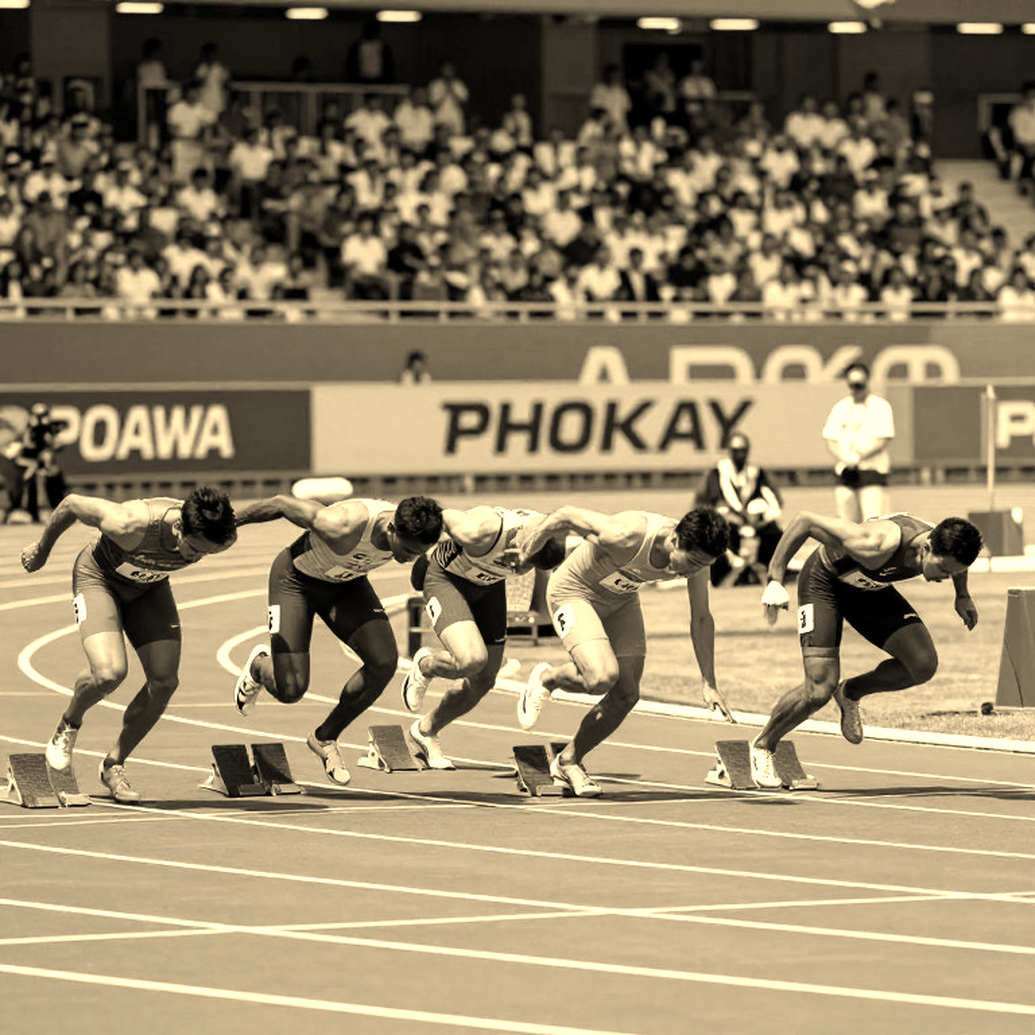
Meanwhile I will keep the ledger open. It currently holds one name, one date, one substance and one provisional suspension. The other names will come — and when they do, I will record them the way I recorded marks in that Portakabin in Manchester: without noise, without pronouncing a verdict, and without leaving a single name out. Because in a sport where a win is decided by three minutes, the truth is usually decided by a date — and that date is not written on any scoreboard.